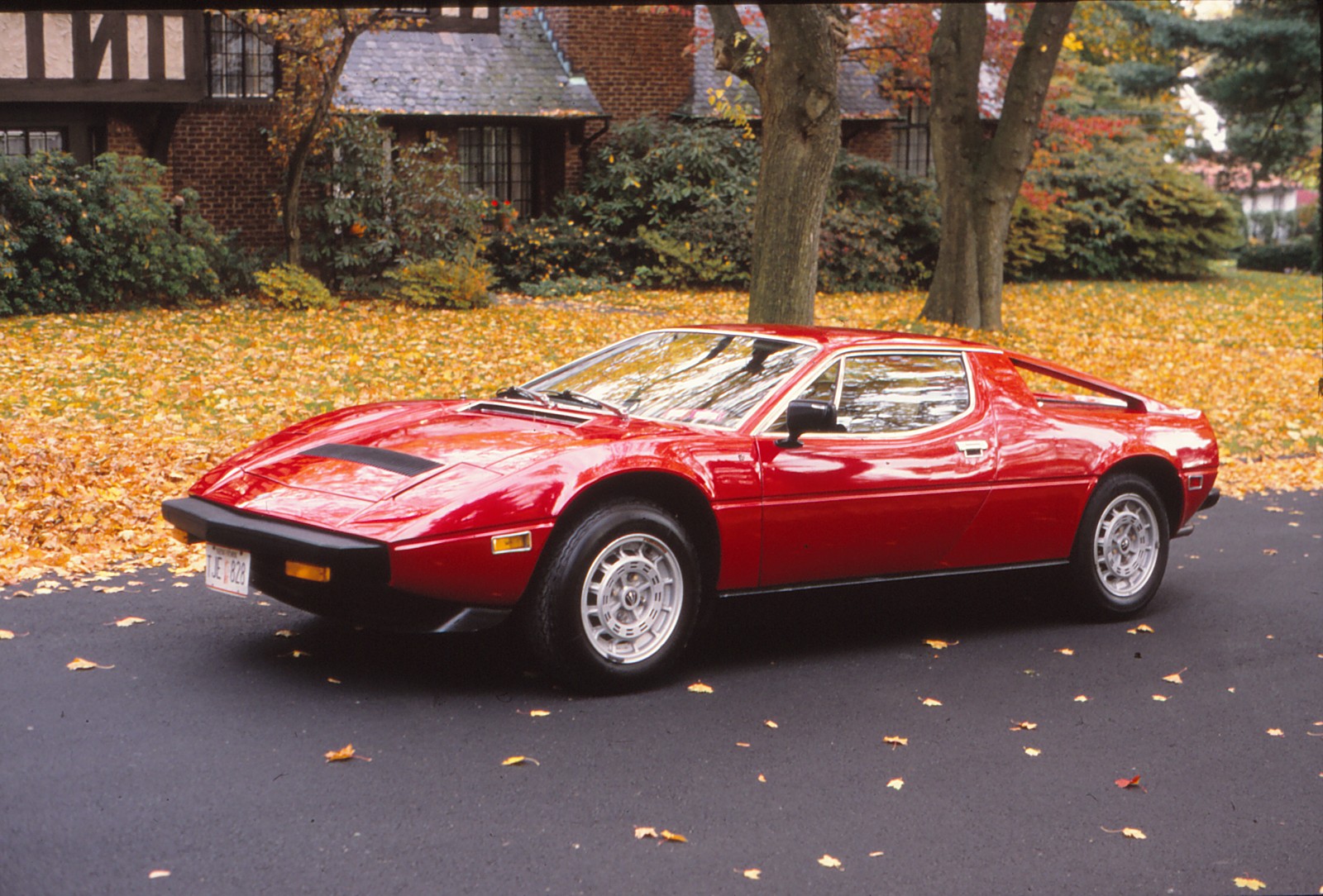


Maserati, under the Orsi family, as it had been under Fratelli Maserati and later under Alejandro DeTomaso, was always financially marginal, despite a succession of seductive automobiles. So when in 1965 Citroen president Pierre Bercot suggested a Maserati engine for a new Citroen, it was too lucrative of an idea for the Orsis to ignore.
But neither the Orsis nor Maserati had the capital for the production Citroen would need. So to take advantage of the proposition–and to preserve the company–the Orsis sold Citroen about 80 percent interest in Maserati. The goal, of course, was to provide engines for the Citroen SM, a revival of the French grand routier. Except that the postwar taxes on big-engined cars–the ones that had destroyed the routier–were still in effect. What Citroen needed was a high-performance but tax-beating 2.5-liter V-6, something not already in Maserati’s inventory. But Maserati had a design for a 3.0-liter V8 intended for what became a stillborn Maserati model.
History/driving impressions originally published in AutoWeek November 15, 1993; republished by author John Matras
Lop of a quarter of the cylinders, jiggle the measurements, and voila, a dohc 90-degree V-6 of 2670 cc sending 180 hp to the SM’s front wheels. However, a peculiarity of the engine was the cam drive. To reduce camshaft whip on the V-8, the drive was by chain and sprocket in the middle of the cam. The pruning of two cylinders put the chain at the two-thirds point.
Supplying engines to Citroen was welcome business, but Maserati was still a carbuilder and certainly new majority owner Citroen wished as much. The fashion among exotic car builders, begun by the Lamborghini Miura, and imitative of sports racers like the Ford GT40 and Ferrari 250LM, was for mid-engine road cars. Impractical, yes, but very marketable. Maserati’s entry, as well as its top of the line, was the Bora. But business, even for exotics, required more than just one product, and just as Ferrari had the 308GT4 and Lamborghini had the Urraco, Maserati would have the Merak.
It would, like its competition, be mid-engined. But its supporting role meant that it had to be less expensive. Citroen hydraulics, used extensively on the Maserati Bora, were limited to steering and brakes on the Merak. The engine, though, was enlarged to 2965cc and, with Citroen drivetrain, lifted from the SM, rotated and installed in the Merak’s rear. Dash, controls and single-spoked steering wheel were SM transplants as well.
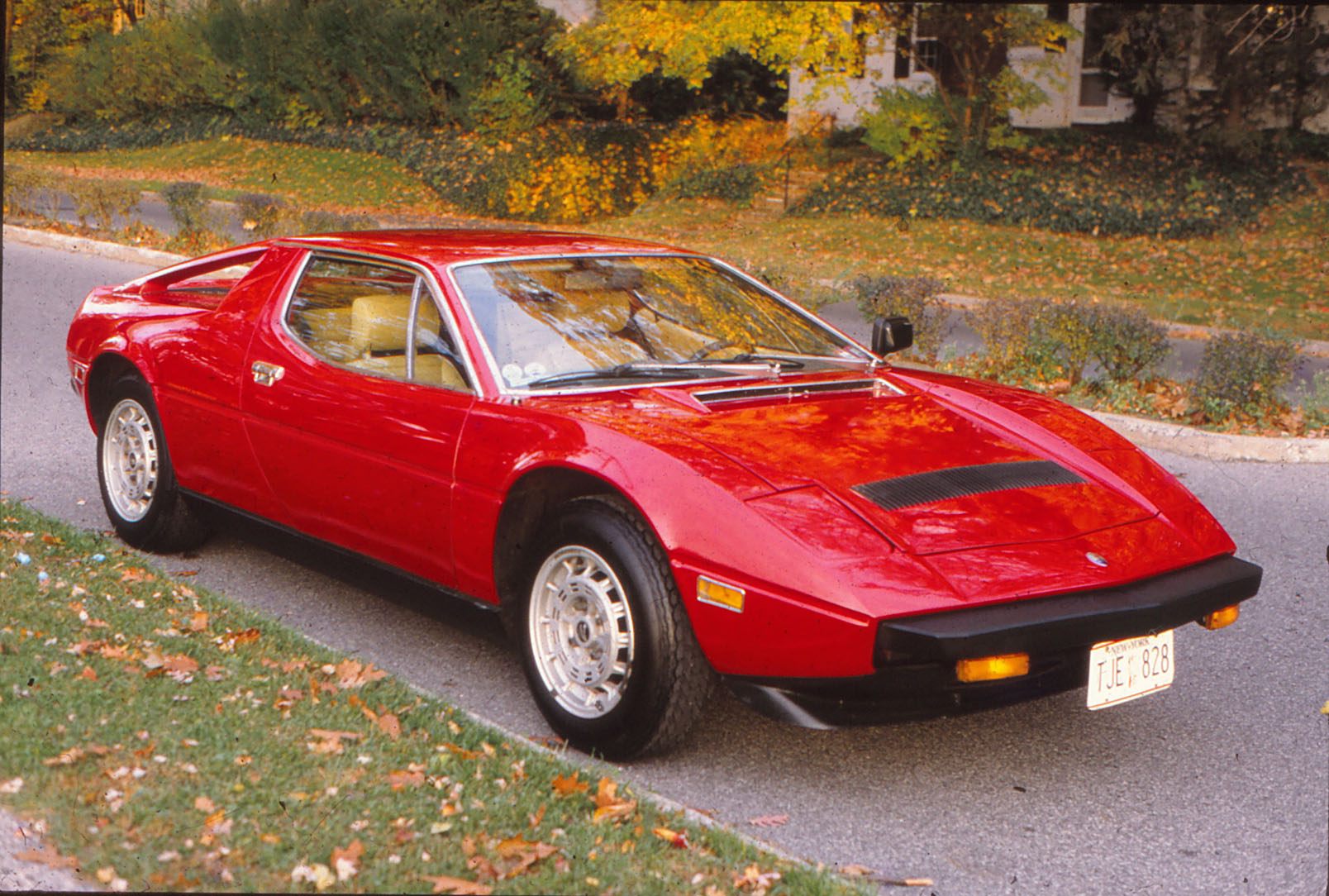
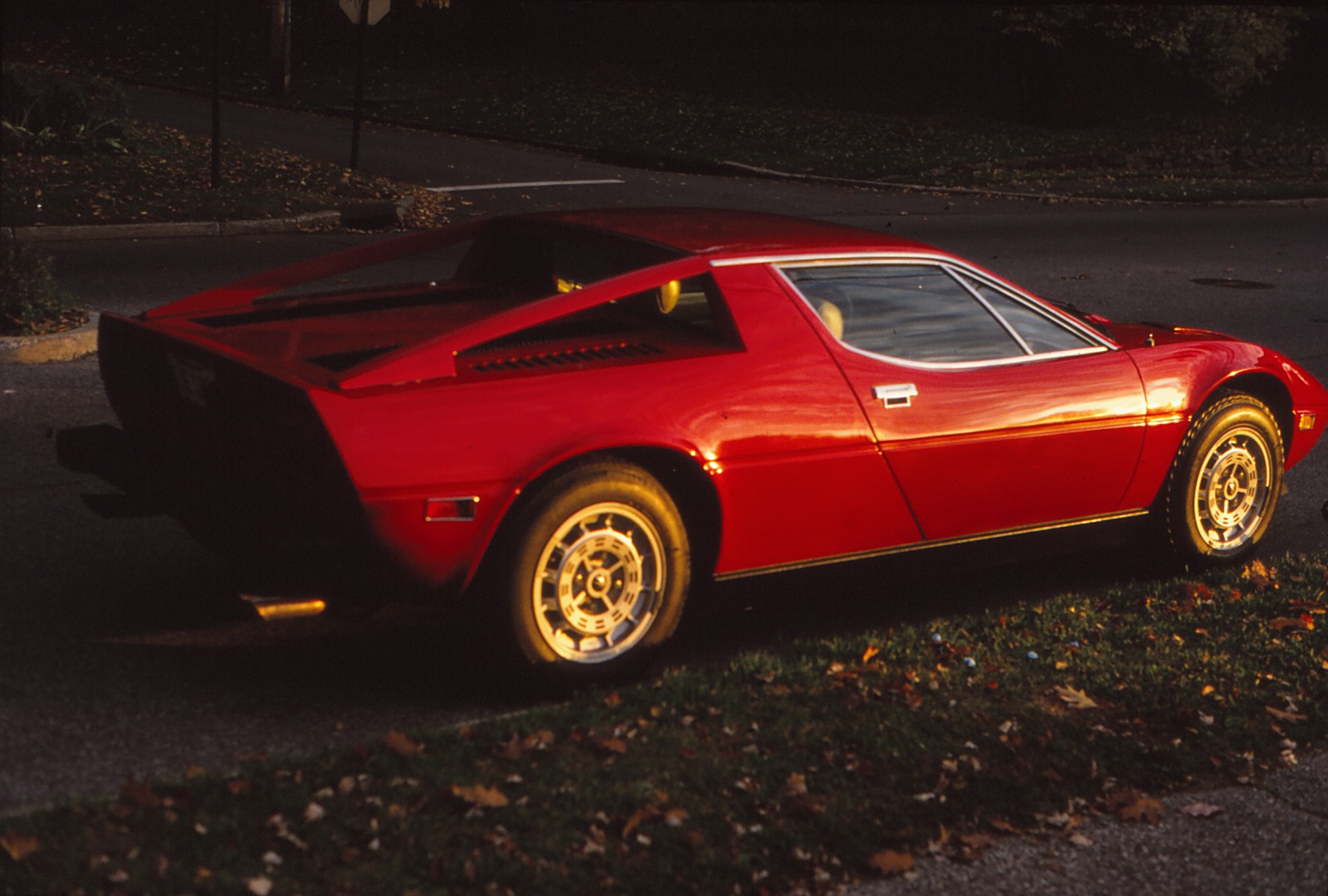
Styling, however, was pure Maserati and, like the Bora, from Italdesign. To differentiate the Merak from its larger sibling, the smaller Maserati was given a “+2” rear seat and the glass fastback of the Bora was replaced by a flat rear deck and distinctive flying buttresses. The latter were pure styling, carrying no load, and the rear seat, with vertical back and no legroom, was suitable for maybe a beagle or a child in need of discipline.
Though Maserati’s sales fell slightly due to the oil crisis, demand for Citroen’s SM collapsed and Maserati engines to Citroen went from 1,750 in 1973 to 300 in 1974. No longer needed for engines and otherwise a money sink, Maserati became a burden for Citroen, which itself had been acquired by Peugeot after the SM and Comotor disasters. The Modena factory faced shuttering in mid-1975.
Whatever one may say about Alejandro DeTomaso, he saved the marque of Maserati. He obtained control cheaply, only putting up 30 percent of a fire-sale price with 70 percent government subsidy. The Orsi family was out. The Merak was refitted under the skin, with the Citroen transmission replaced by a ZF 5-speed [I’ve since been corrected: The transaxle/gear box always remained an unchanged Citroen unit from start to finish. No ZF gearbox was ever used in the Merak/Merak SS.] and the Citroen hydraulics removed and SM dash and steering wheel replaced by more Italianate equipment including a 200-mph speedometer. Bigger carburetors and higher compression raised horsepower (from 180 to 182 hp for the United States, 220 for the rest of the world) and weight was down by some 75 pounds. As such, the Merak became the Maserati Merak SS.
The Maserati Merak SS was all the more a Maserati for the modifications. It does feel somewhat peculiar for a mid-engined car to have such a high cowl. From the driver’s seat, it looks tall enough for an inline six to be out front. Vision is otherwise excellent for an exotic, particularly to the rear, thanks to the vertical rear window and, for U.S.-bound SS models, the elimination of the bulge on the rear deck for the full-size spare (a space-saver was fitted).
Cold-start fast idle was particularly common for the era, but the Maserati Merak SS’s was an uncommonly high 3000 rpm, enough so that Oliver Cromwell, owner of our 79 open “quote “Escape Road” car, delayed our access to the driver’s seat until the idle dropped to normal. The Merak then proved surprisingly docile in traffic, pulling from low revs and needing no clutch slipping or radical rpm. The shift lever is short and mounted on a high central tunnel; shifts are long, however, probably due to the long linkage to the gearbox. Handling still feels crisp and a contemporary test pegged lateral g’s at 0.824, particularly good for the era.
The Maserati Merak SS was quick, with the quarter-mile clocked in 1978 at 17.0 seconds at 84.5 mph, top speed at 141 mph. That’s good for a 3185-pound car battling the worst years of emission controls, though hardly amazing. Perhaps most astounding is that the Merak–and Maserati–survived. U.S. imports ended in 1979, but sources place total Merak production at 1,832 from 1972 to 1983. That was more than any Maserati to date and enough to hold the company’s place until the arrival of the Maserati Biturbo.
That business and finance overshadows the essence of the Maserati Merak is not the fault of the car. That Maserati business and finance existed at all, though, was largely because the Merak had existed.
Addendum: Looking for Maserati Merak camaraderie? Check out the MerakGroup.com. “We have in the Merak Group approx 100+ members from all over the world. The Merak Group has been in existence for approximately 15 years. Within the Group we have a number of highly talented gurus.“
Here’s more Maserati on RememberRoad. Enjoy.