

Tripping lightly through the corner, accelerating, shifting quickly, then braking for the next curve, the Fiat Super Brava flies like a gerund around the dappled…
Okay. Gerund is a grammatical term, not something that goes flying down the dappled whatever. You were expecting the name of an animal – something like a greyhound, perhaps, or sturdier. Or maybe a type of antelope, or breed of wild horse.
Still, gerund may best describe the Fiat Super Brava. A gerund, after all, is the noun form of a verb (accelerating, braking), and a Super Brava is best in motion, best experienced from behind the steering wheel. In a decade in which affordable sedans that were both roomy and fun to drive were few and far between, the Super Brava had something going for it.
History/driving impressions originally published in AutoWeek April 22, 1996; republished by author John Matras
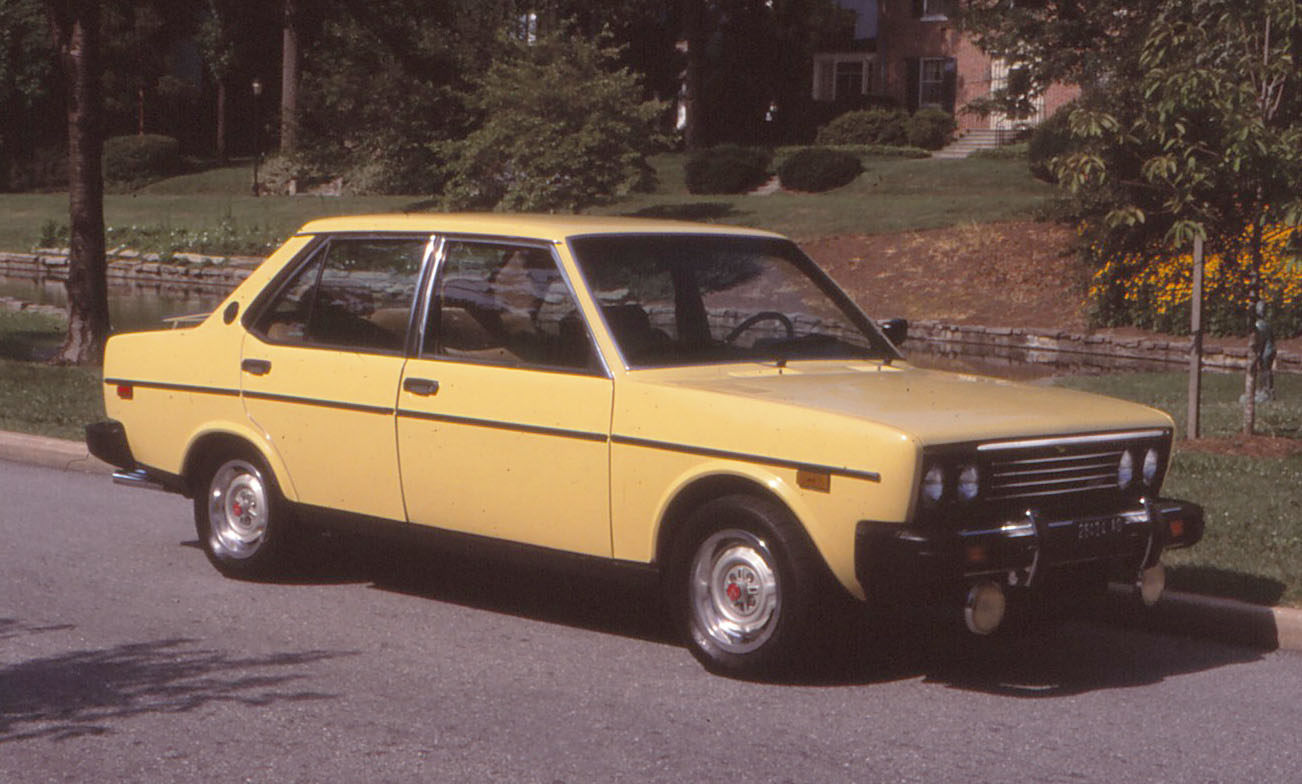
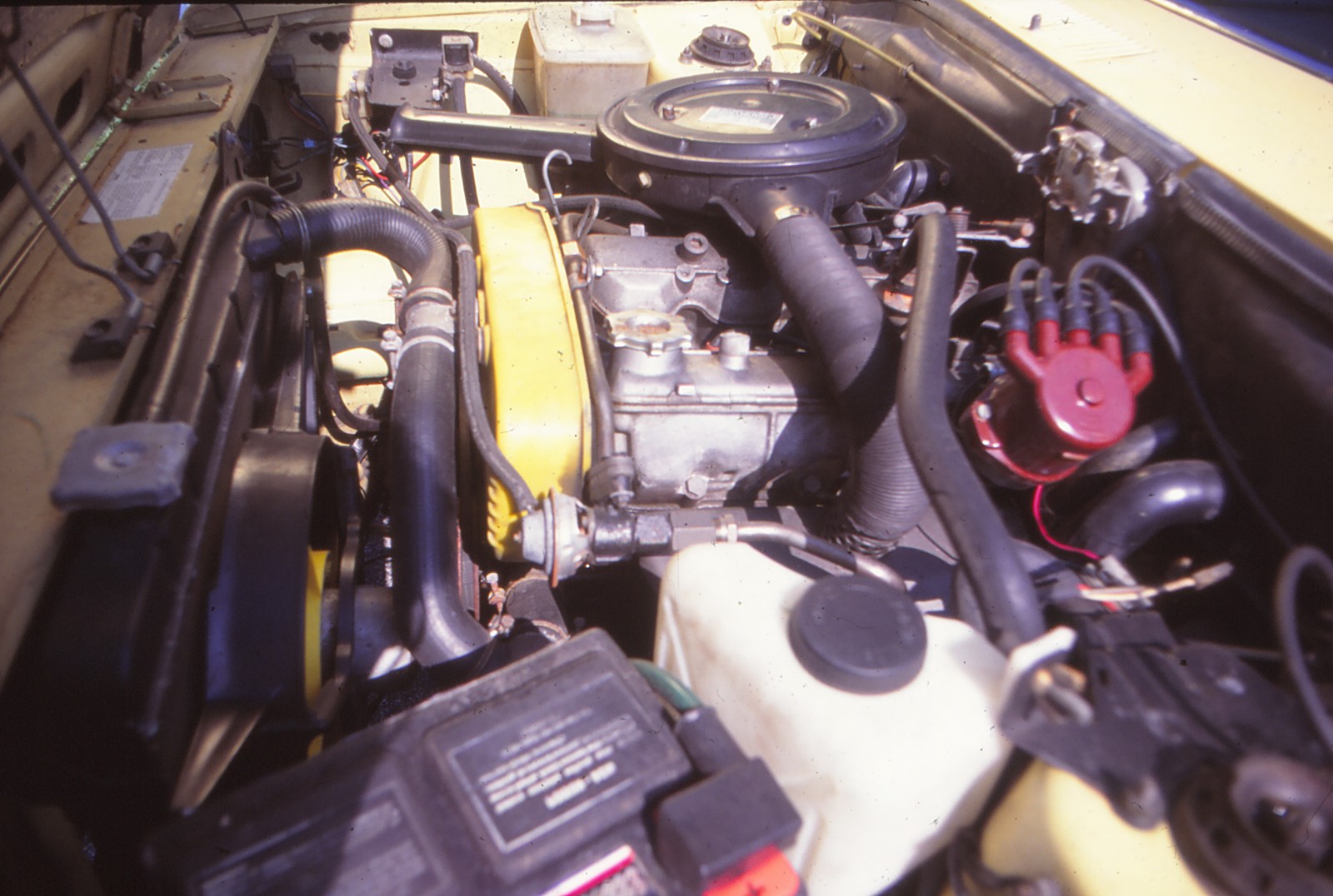
Not that it’s ugly. To the contrary, the Super Brava is as tidy a three-box shape as one could ask for. Introduced in 1975 as the Fiat 131, it was the successor to the 124 sedan line. Although it was offered with a variety of engines in Europe, including a diesel, it came here with the 1.8-liter dohc for that had been used in the 124 Sport models [coupe and spider] since 1974. The Fiat was thus already de-smogged for U.S. sale.
At first, only a manual transmission was available in the 131; it was a five-speed, and uncommon for the era. The car even had a tilt wheel to go with its manual rack-and-pinion steering. The 131’s body was designed around the passenger compartment. With bucket seats up front, it easily seated four, though three could squeeze in back. Fiat bragged about three horizontal “rings” of crash protection for the passenger compartment.
Fiat considered front-wheel drive and an independent rear suspension for the 131, but opted instead for rear drive, and a five-link, coil-sprung live axle. It was the first rear-drive Fiat to use McPherson struts. The rear drum brakes were cheaper than discs. Still, a load-sensitive, pressure-limiting valve and the vacuum-assisted system was quite sophisticated, and it worked to combat premature lockup.
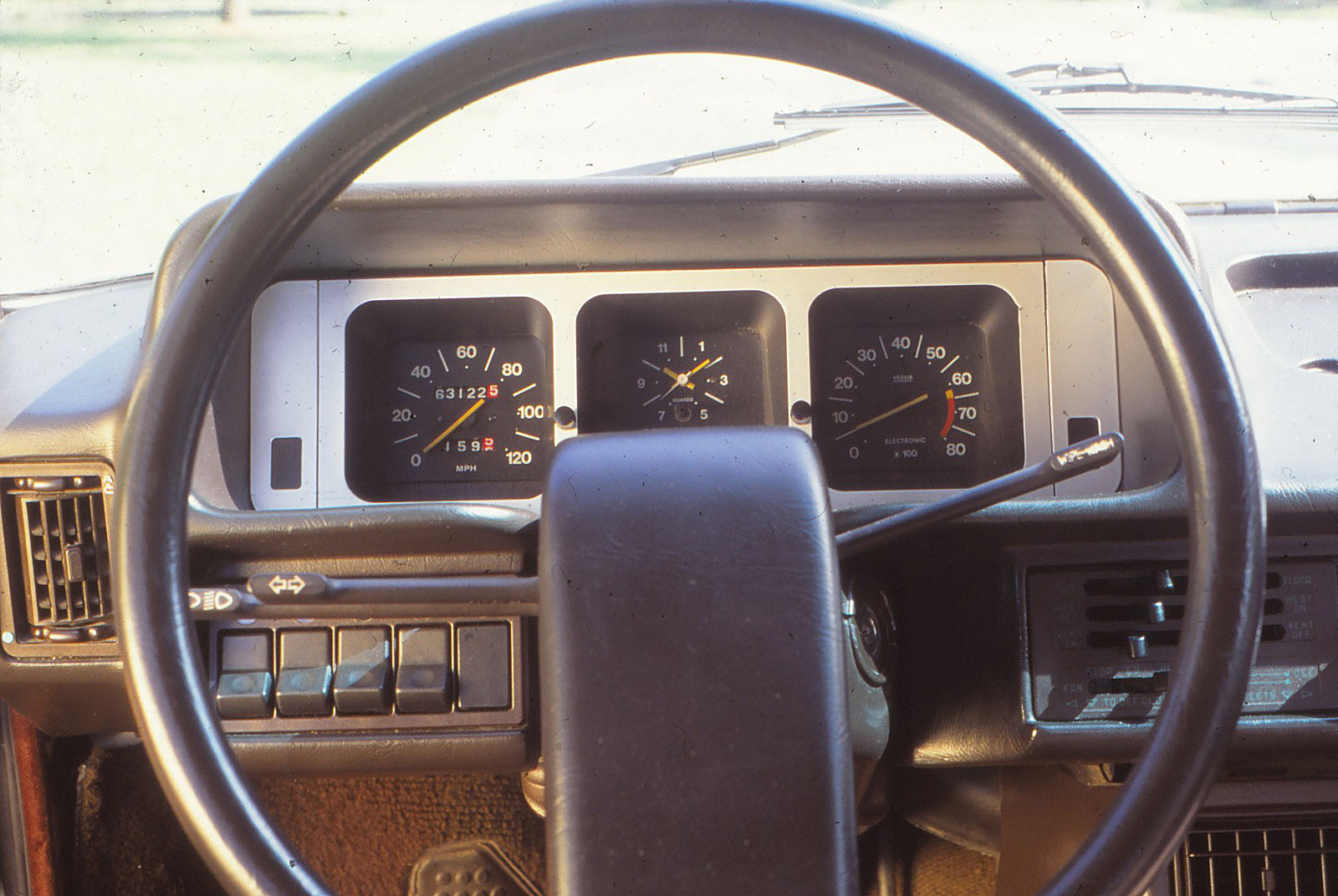
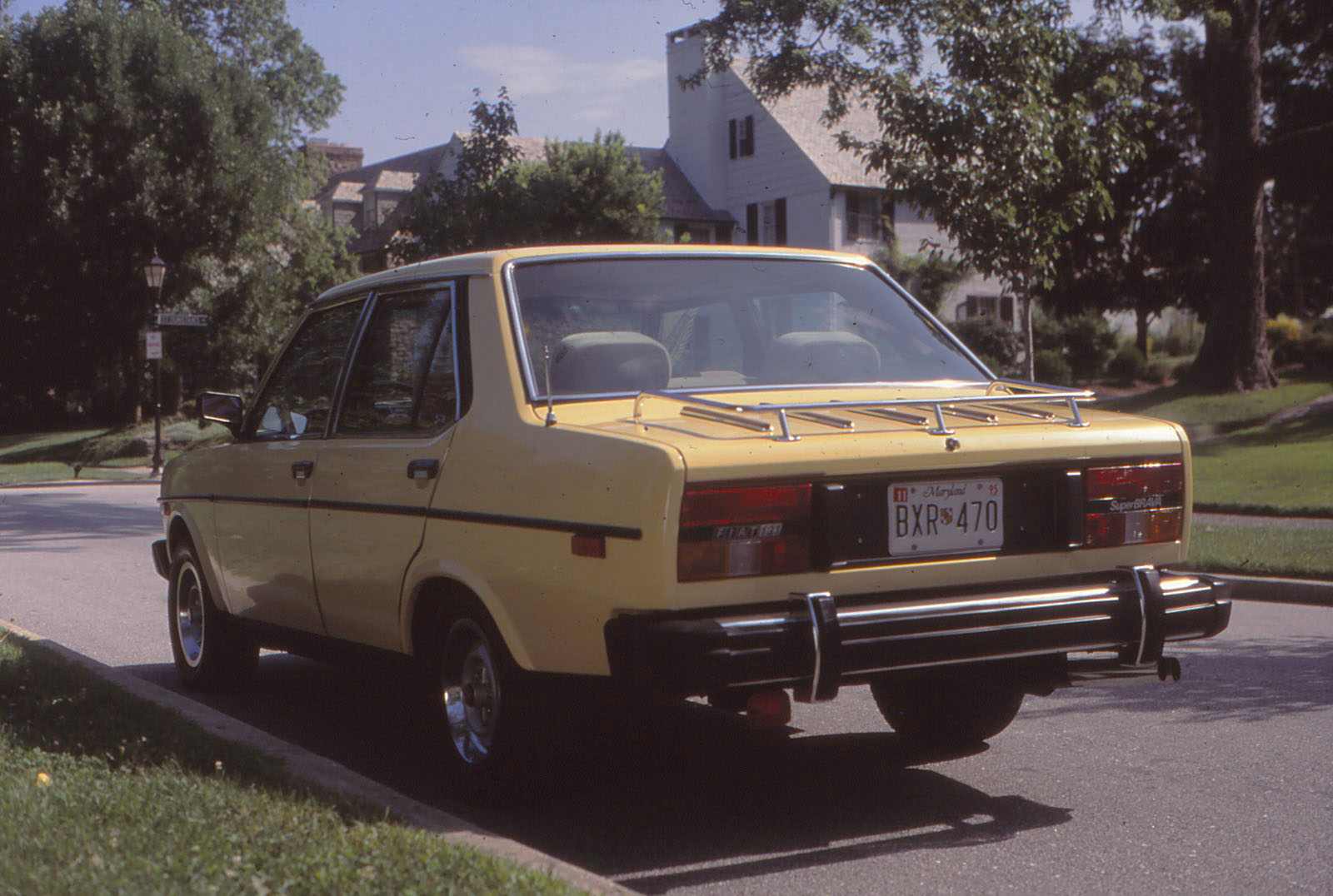
Fiat upgraded the 131’s interior in the middle of the 1978 model year, and called the result in 1978 1/2 Super Brava. Prices started at $4,795. The most notable upgrade was upholstery that was covered in velour, the fabric of the ‘70s. A lesser, all-vinyl version known as the Brava shared new steel wheels, a sculpted hood and rear deck, new taillamps, and restyled C-pillars with its more upscale sibling. The one-spoked steering wheel was controversial, but the new instrument panel and dash, with its top-mounted, sliding glovebox door, wound up on display in the New York Metropolitan Museum of Modern Art. Mechanically, the Super Brava was unchanged from the 131, except that a three-speed automatic was now available.
The car’s steering lightens with speed, which doesn’t come quickly: 0-60 MPH is a 12-second affair. Even contemporary testers, accustomed to emissions-choked performances, asked for “more zip.” Winding the twin cam to a 6500 rpm redline is entertaining, but the anti-smog gear limits what the engine can do on top end. Shifting the five-speed – slick and precise and reminiscent of an Alfa – is fun as well. And that’s as it should be, because in the Fiat Super Brava, it’s necessary to shift frequently.
Fortunately, Fiat engineers did their usual magic on the suspension. Although the ride is smooth and free of jiggle over irregular asphalt, in corners, the sedan hangs on like an incumbent in an election year. It pushes lightly and leans in one direction as it heads in the other, but when equipped with decent tires, it doesn’t let go. These are admirable qualities, at least in a sedan of this vintage.
Darrell Roberts of Baltimore, Md., found an original Fiat Super Brava two years ago (with no rust!). The car had all its smog equipment and a five-speed, and Roberts has needed to do little to it but routine maintenance. The trunk rack, fog lights and bumper overriders were all installed by the dealer when the car was first delivered. The interior is still velour, and the single spoked steering wheel an abomination for drivers who hook their thumbs over the spokes. The lack of power steering reminds drivers why no one liked to parallel park in the old days.
The Brava engine was bumped to 2.0 liters in 1979, and it gained fuel injection in 1981. But tightening omission rules kept the sedan from gaining performance as measured by the stopwatch. Of course, it was probably not the lack of speed the killed the Brava, and ultimately Fiat itself, in the United States.
As the 1980s dawned, the company’s sales sagged under the weight of increasing quality problems and the onslaught of Japanese competitors.
Fiat fought back with its “Because We Care” ownership program, which provided a full warranty for two years and other service incentives. But it didn’t help much; by 1981, Brava sales had fallen to about 10 cars for each of Fiats 650 dealers in the United States, and the car was dropped in 1982. By 1984, Fiat was ghetto-ized, and only its sports cars, sold under Bertone and Pininfarina brand names, were offered in the United States. By the end of the ‘80s, Fiat’s sales network had disappeared from the States.
But don’t trouble yourself with corporate woes. Enjoy instead an Italian sports sedan, a distinctive if unavailable commodity today, one that is well worth gerunding off into the country.
Addendum: Fiat, along with Lancia, has always lived on the edge in America, appealing more to the sporting enthusiast than the typical car buyer whether for reliability, safety, size or general preference. And it’s hard for a car company to make a living selling sports cars; Porsche flourishes only because of SUV sales. Fiat tried to go mainstream with the Fiat 131 and the Fiat Super Brava plus the Fiat Strada but we’ve seen how that worked out.
Want to get involved with Fiat cars and people? Check out the Fiat Club of America. And for more Fiat on Remember Road, click here.