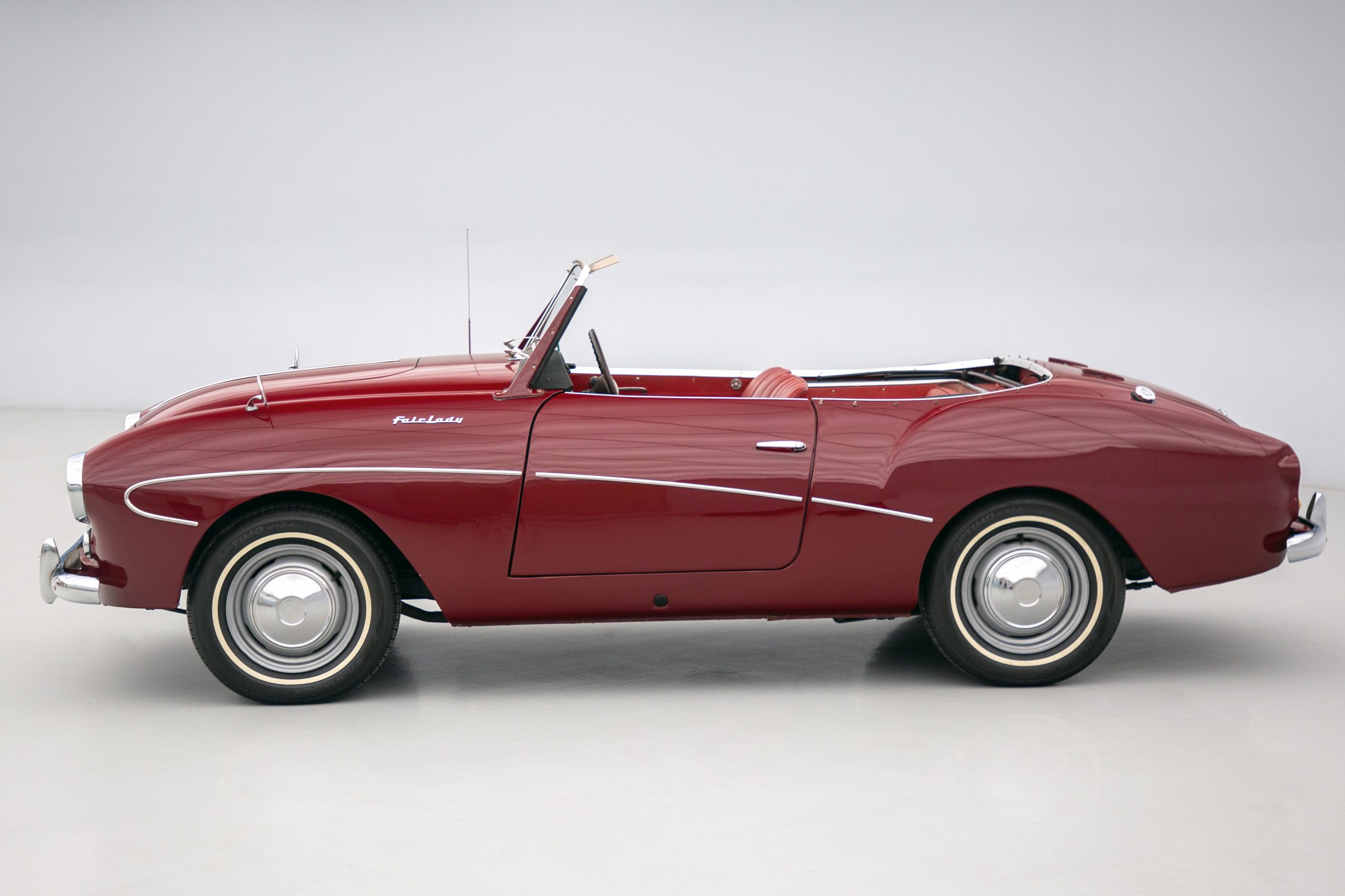
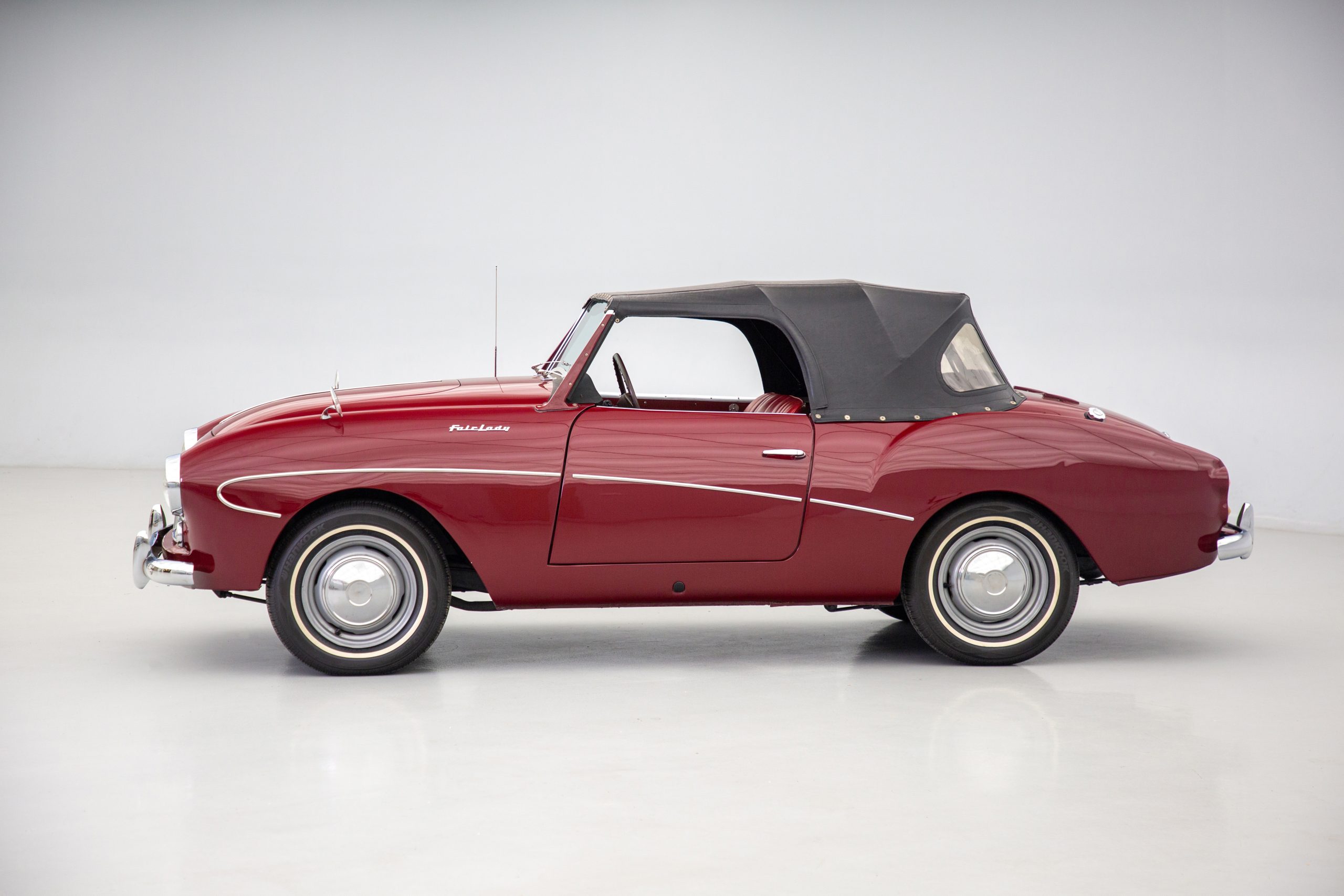
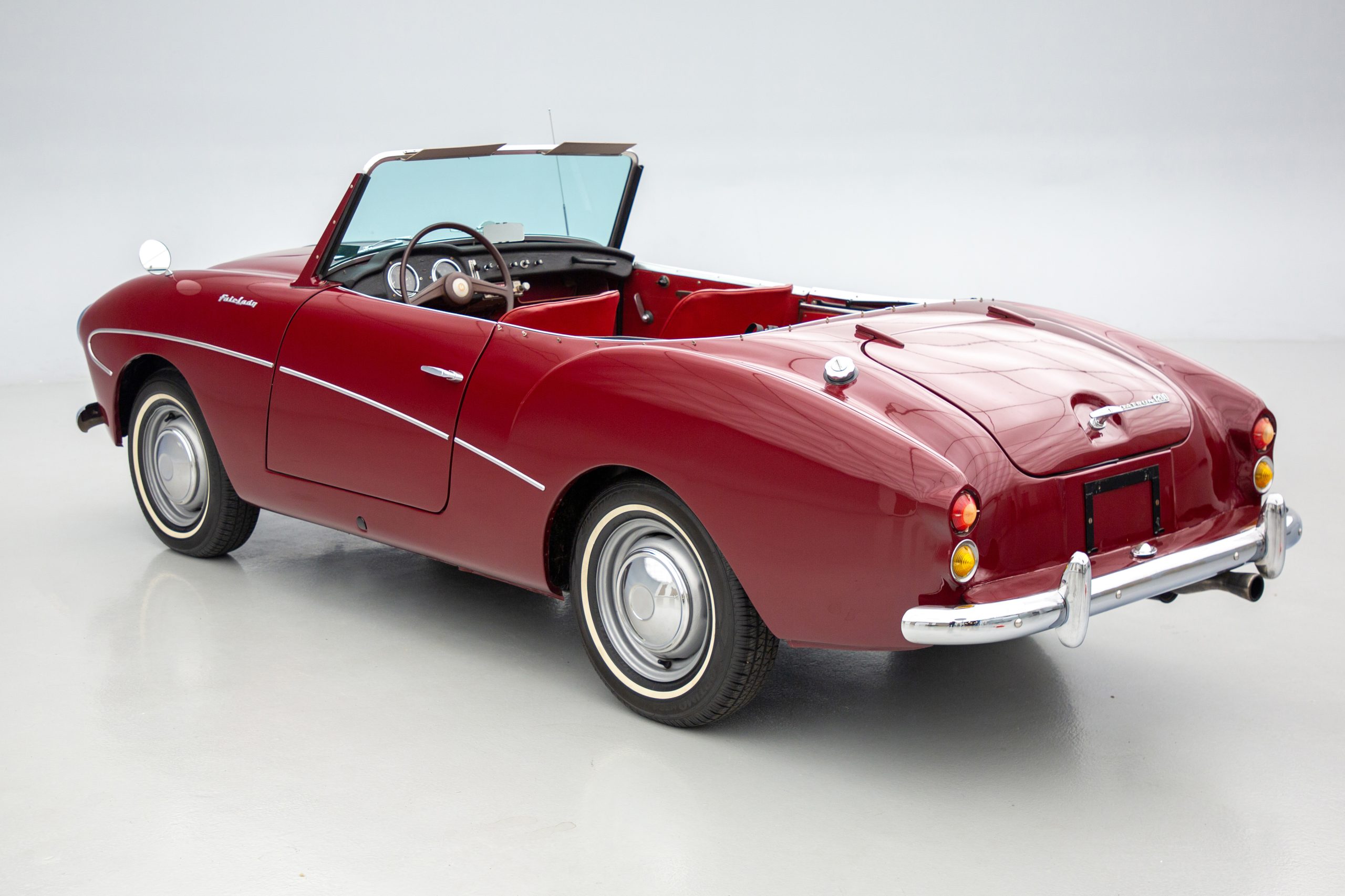


Nissan had cheek. There was only one American company making a sports car. So how presumptuous for Nissan, most of whose home market was commercial – read taxi – to make a sports car and try to sell it in the U.S. But Nissan had a sturdy little sedan, the four-door Bluebird, powered by robust one-liter overhead valve four, and it wasn’t an unreasonable start for a sports car. Most sports cars from Europe were cobbled from sedan components, many starting with less than the 37 hp Bluebird.
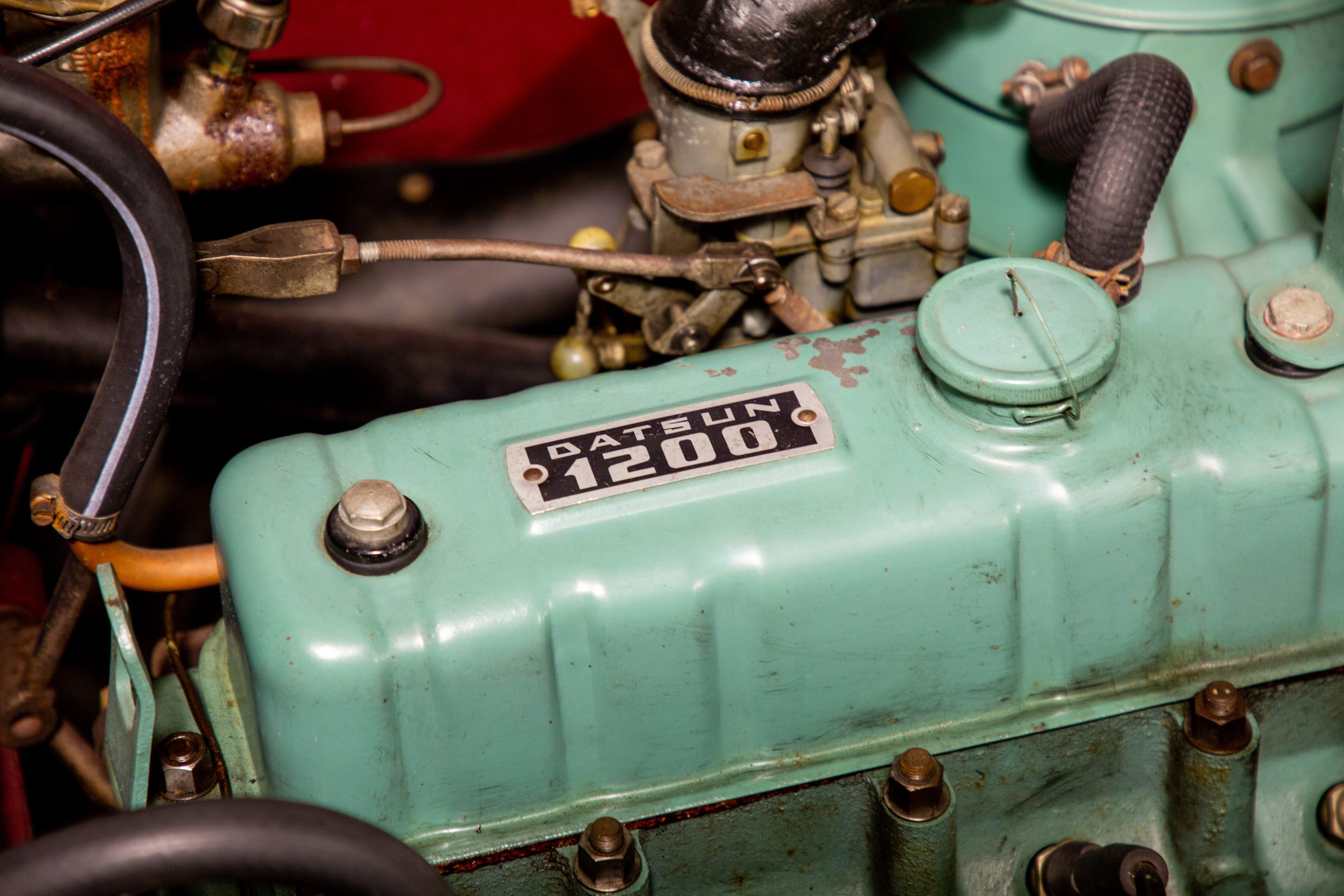
But, after first U.S. sedan imports (then as Datsun) in 1959, the 37 hp four yielded to a 48-horse 1.2 liter in 1960. The 1189 cc engine got a compression boost to 8.2:1 and a progressive two-barrel Hitachi/Solex carburetor in 1961. The overhead valve four was slightly over square and, revving to 6000 rpm, made 60 bhp at 5000 rpm. Not much by today’s standards perhaps, but easily out-muscled the number one U.S. import. This import, if you need any hints, went by two initials near the end of the alphabet.
History originally published in Sport Compact Car April 1997; republished by author John Matras
For the 1961 Datsun Fairlady, Nissan engineers had taken the sedans 88.9-inch wheelbase box section ladder-type frame down to an 87.4-inch wheelbase. Front suspension was by double A-arms and torsion bars with tube shocks. This was later replaced on the Bluebird with coils and an inch-and-a-half wider track, but apparently no Fairladys, at least in the U,S., came with that suspension. Out back the ubiquitous live axle on leaf springs remained. A front anti-roll bar was used by sedan and sports car, though the cart springs the rear stiff enough as it was.
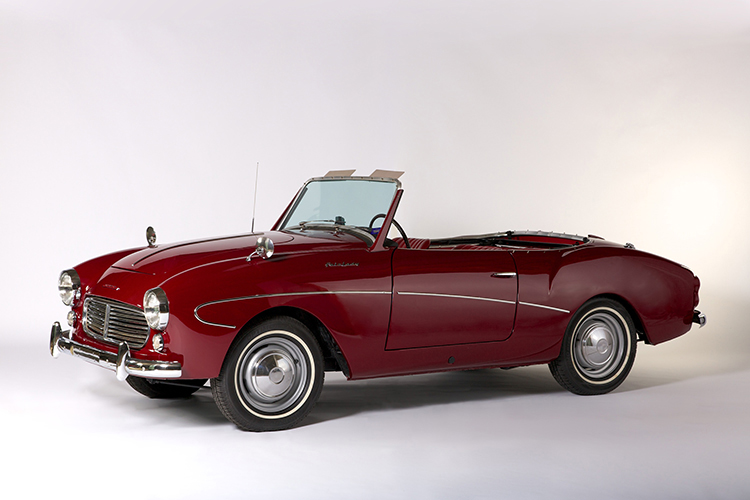
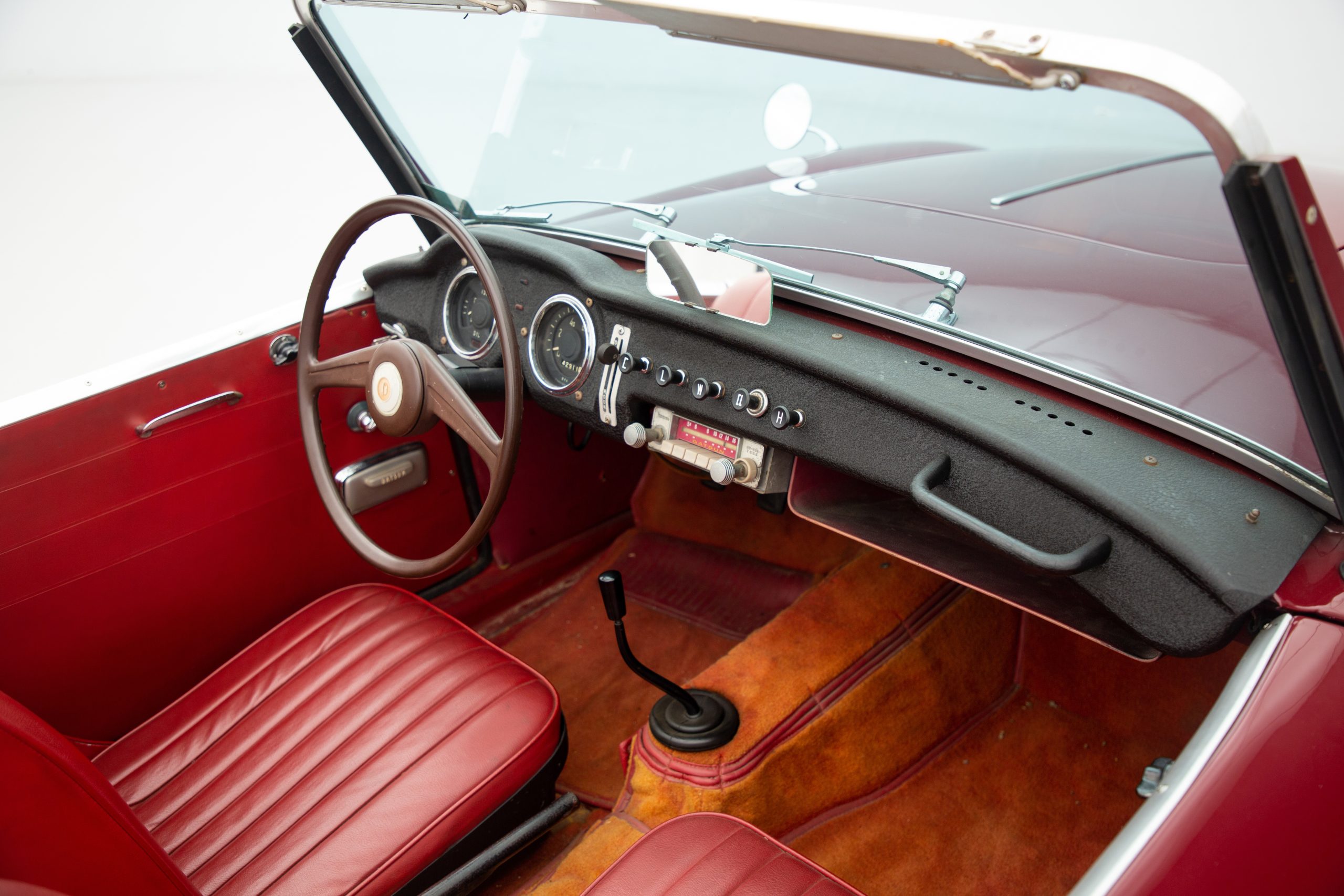
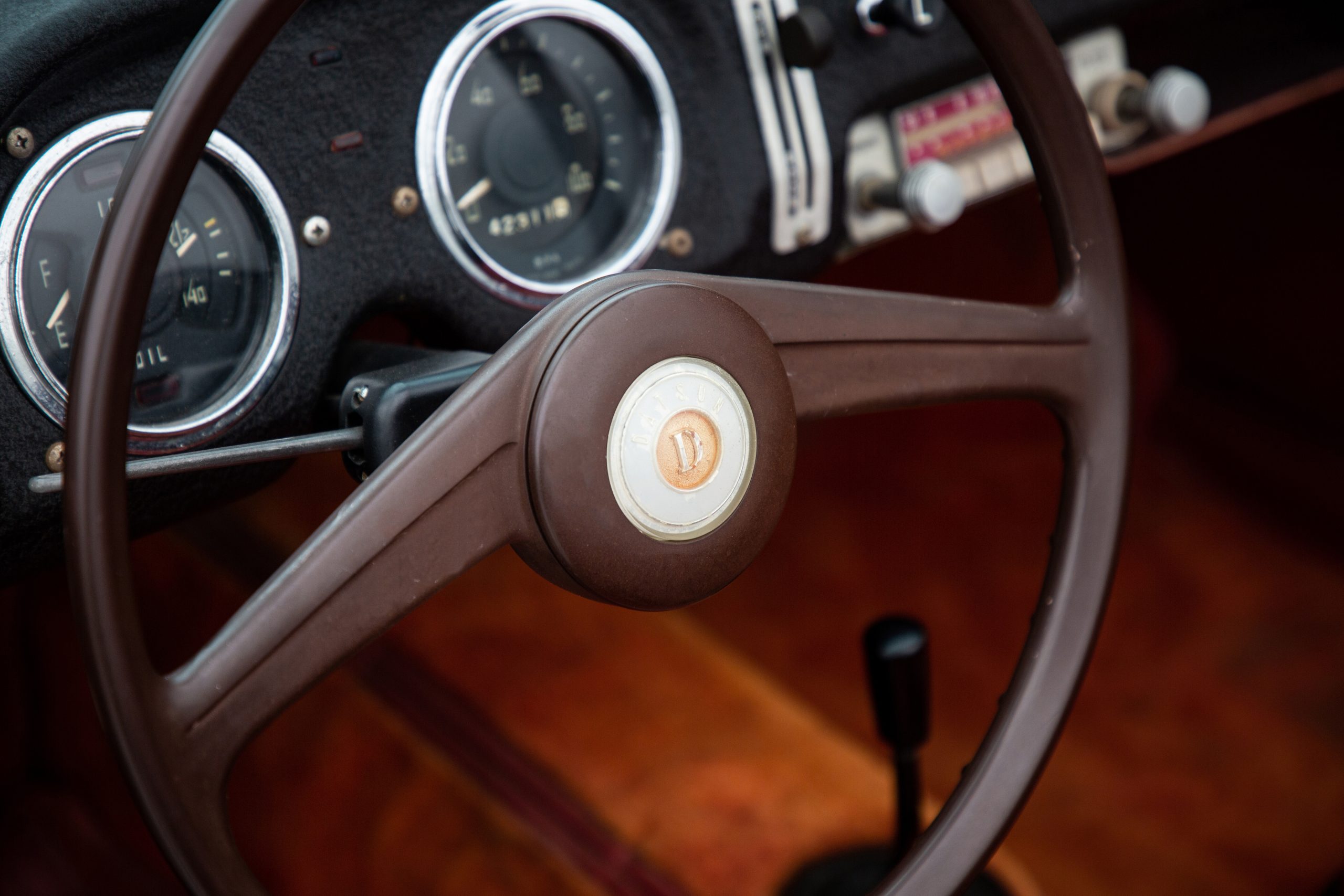
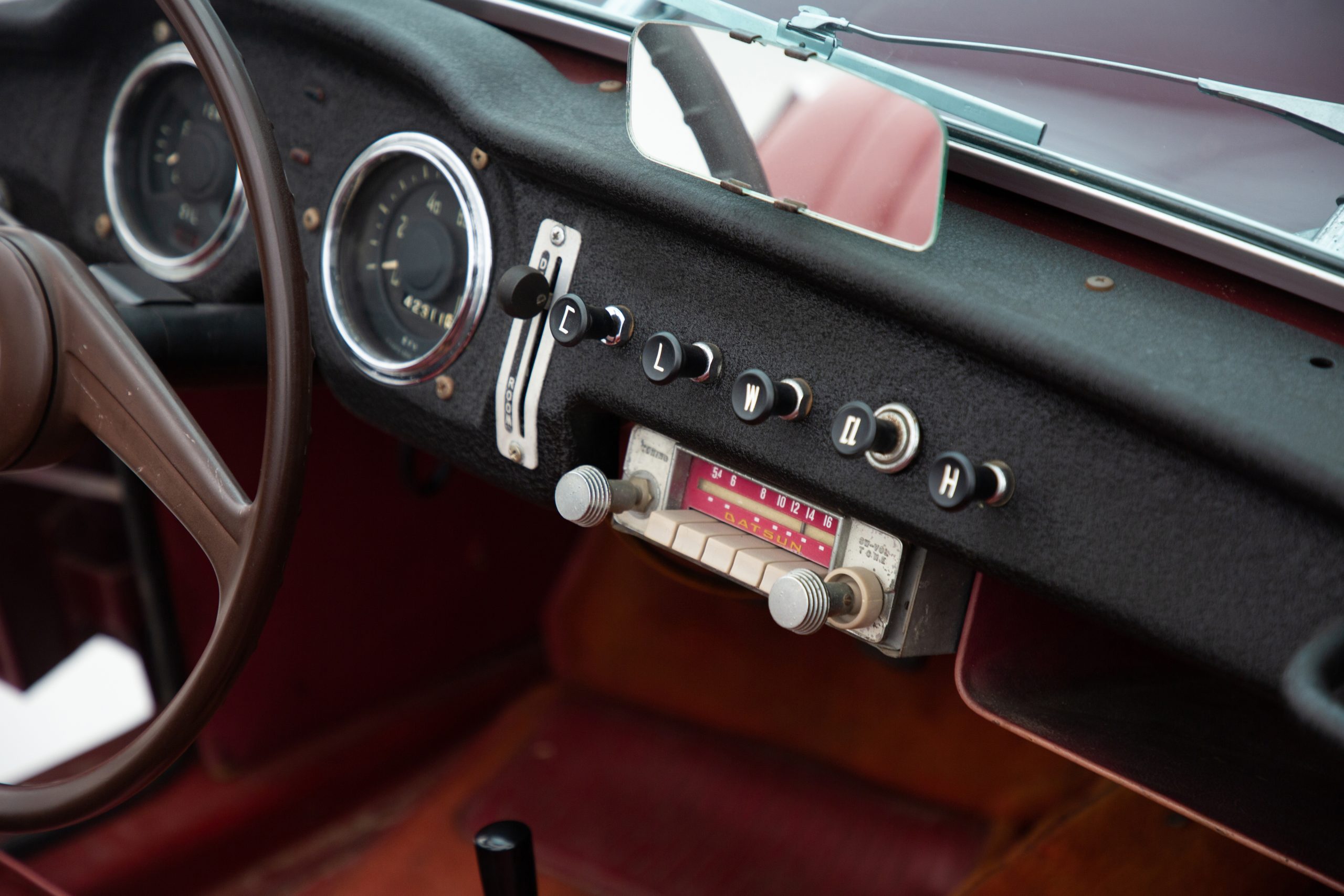
The 1961 Datsun Fairlady was no lightweight, weighing in like the sedan at 1960 lbs. It looks stubby and malproportioned, and with the side-sweep of chrome and two-tone paint, like a caricature of an Austin-Healey. In fairness, the designers worked around a high cowl and the need for a back seat. MITI, Japan’s powerful trade organization, frowned on such trivialities as a two-seater when car ownership remained rare. Adding a back seat raised the height of the bustle and contributed to the car’s chunkiness. In a Datsun Fair Lady road test, Motor Trend praised the front bucket seats, finding “proper thigh support and the curved backrest (that) did a good job of holding passengers in place” and legroom for anyone short “of a Wilt Chamberlain.” The backseat had 36 inches of headroom with the top raised (an inch more than the front) and “adequate knee-room as long as the front seats are adjusted even slightly forward.” That top was a U-Build-It, with snap-off fabric and side-curtains that used all of the trunk the spare didn’t.
The flat windshield of the 1961 Datsun Fairlady made for a hair-tousling ride for a lady. Of course, speed accrued slowly as interest in a small savings account. The quarter-mile took 24.3 seconds with a trap speed of 60 mph. Nissan claimed an 82 mph top speed. An Austin-Healey Sprite only did 21.8 at 62 mph with a (tested) 78 mph top end. With its four-speed manual gearbox (synchro on the top three), Nissan’s sports car was also quicker than its three-speed-equipped sedan. Nissan put bigger brakes on the sports car, 10×1.75 – inch drums versus 8×1.4-inch, and bigger wheels and tires. the sports car had 5.20×14 Bridgestone bias ply tires compared to the 5.60×13 Bridgestones on the sedan. Rim width was four inches on both.
In the land of John Wayne, Nissan bravely marketed it sedan as the Bluebird and even kept sports cars home market moniker, “Fair Lady,” allegedly so christened by an executive enthralled with Lerner and Lowe’s 1956 musical My Fair Lady. It took a secure male to drive a Datsun Fairlady, but Motor Trend reported in 1961 that one was raced and its engine readily turned to 7500 rpm – “and it has yet to come apart.”
The 1961 Datsun Fairlady didn’t make much of an impact on the U.S. market. An educated guess puts total sales at less than 230 before being replaced by the Datsun 1500 roadster in 1962 (later be followed by the 1600 and Datsun 2000 roadster). That would lead to better and better, but the Datsun Fairlady was first.
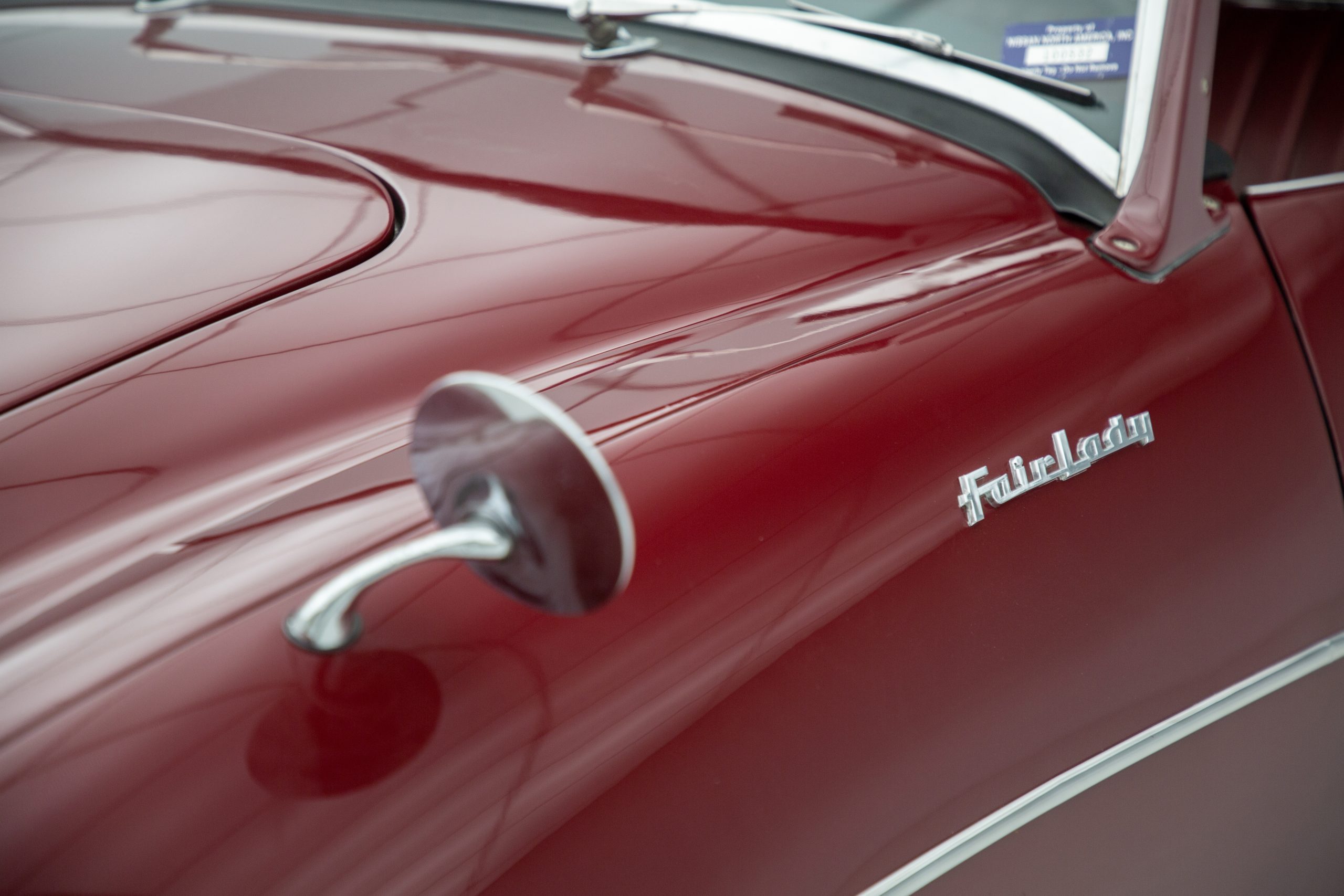
Addendum: Nissan settled on “Fairlady”—one word—though early one there were instances of “Fair Lady”—two words—which can be seen on the fender badge that clearly says Fair Lady.
Nissan says the origin of the name is true. “Katsuji Kawamata, at the time Nissan Motors Chairman, saw the Broadway musical “My Fair Lady” on a visit to the U.S. and was inspired to name a car after the stage hit.”
But the Fairlady’s champion in Nissan’s words was the “legendary Nissan executive and sports car enthusiast Yutaka Katayama – known as “Mr. K” and widely recognized as the father of the Z sports car.
Here’s more on Nissan and Datsun on Remember Road. Check out also my article on the Singer Roadster, which easily been an ancestor of the 1961 Datsun Fairlady. On the other hand, the Mazda R360 was a contemporary. Mazda’s first sports car was the Mazda Cosmo Sport.