1960 Mercury Monterey: Sensible Style
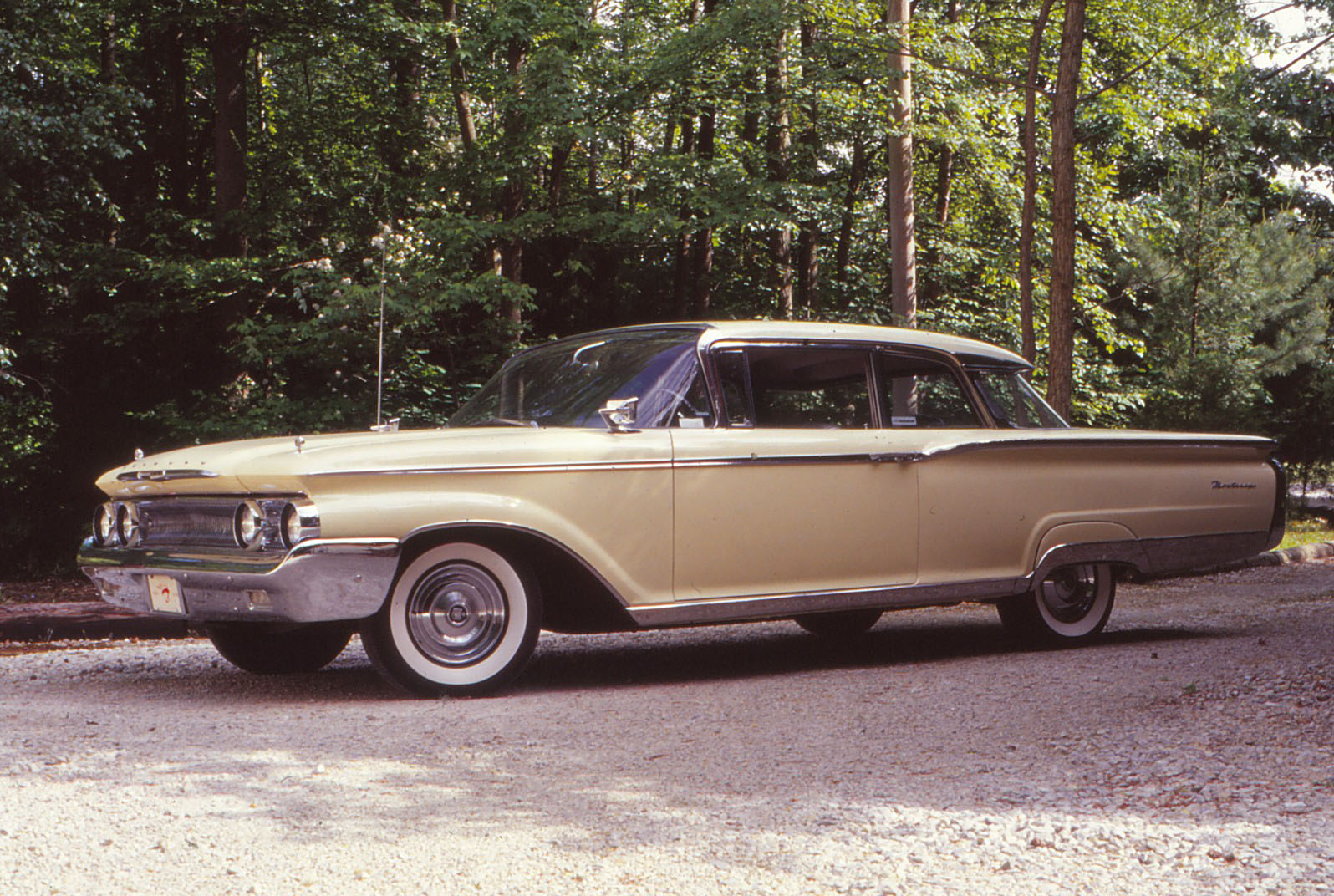


Somebody somewhere flipped a giant page in 1960, closing the chapter on the ‘50s and opening the ‘60s. The gaudy, flamboyant decade that ended matured into a more serious era. The Baby Boomers soon would turn the country upside down, but for the moment, the Greatest Generation was grown-up; with families to raise and increasing responsibilities, they turned to a more sensible-shoes kind of automobile. The Mercury Monterey was one such car.
The Monterey sedan was introduced in 1952 as Mercury’s premium model, but by 1960 it was reduced to Mercury’s bargain-basement of big cars, positioned below the Montclair and the Park Lane models. Nevertheless, except for that upstart Comet, it was the division’s biggest seller, offered in two- and four-door sedans and hardtops as well as a two-door convertible. Of these, the four-door sedan sold the most, but the two-door sedan was the least expensive, with a base price of $2631.
History/driving impression originally published in AutoWeek February 3, 2003; republished by author John Matras
The Mercury Montery two-door sedan had a curb weight of 3952 pounds and was longer than Kansas in summer. Inside there was a back seat that meant business, with enough foot room up front that when Jim Wickel of Ewan, New Jersey, bought his two-door sedan in 1967 for $100 and a 1959 Ford, his preschool daughter had space to play at her mother’s feet on long trips. The car was Wickel’s daily driver for a dozen years before it was put out to pasture to be refreshed, restoration being too radical a word for the minimal work it needed.
The Mercury Monterey came standard with a 312-cubic-inch V-8 rated at 205 HP, which was five horsepower fewer than the same engine in 1959, but the newer engine would run on regular gas. Mercury boasted that it was like getting one of every 10 gallons of gas free. Also new in 1960 was a suspension that Mercury said, and perfect ad man-ese, boasted “Road Tuned Wheels.” By allowing the wheels to move backward slightly as well as upwards when meeting an obstacle, to “roll with the punches,” it would “practically eliminate steering wheel flutter.” Bragged Mercury, “Annoying vibration and irritating road noise are things of the past.”
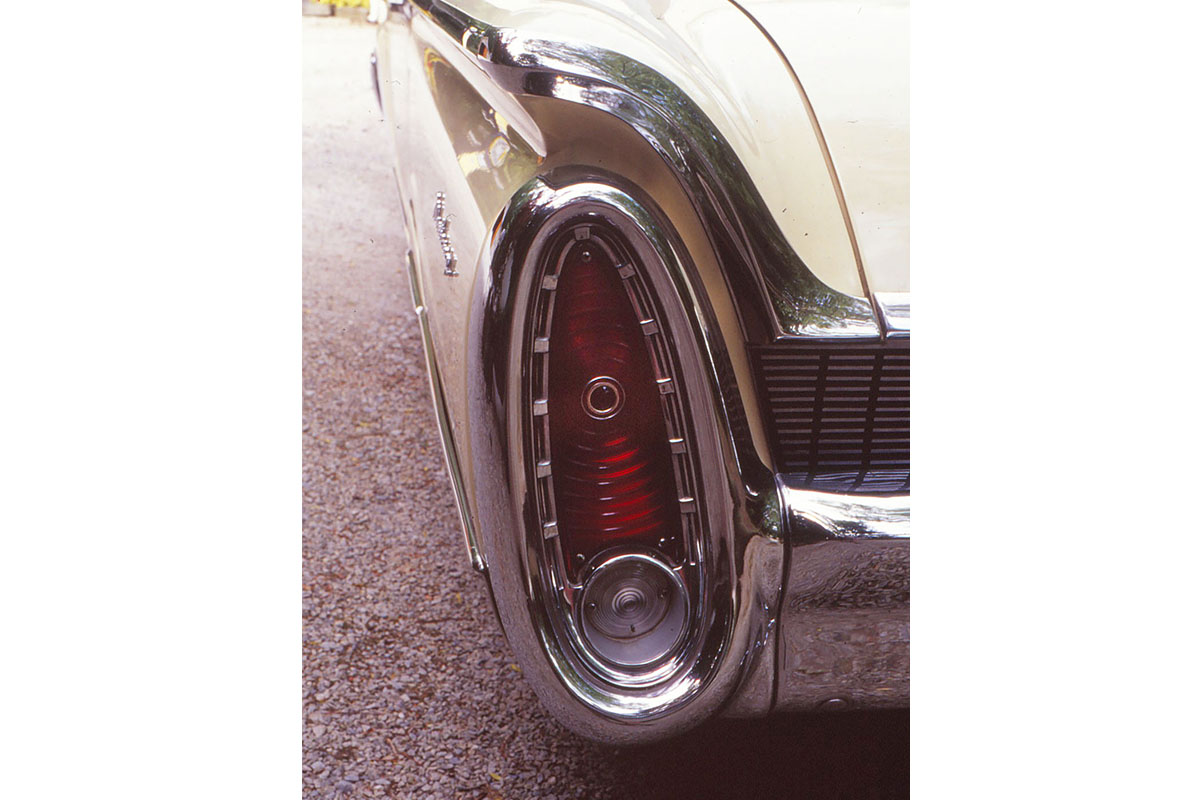
The 1960 Mercury’s featured “Sleek-Line Styling,” and they were much more modest than the chrome-magnets of the year before. The sides were clean of gratuitous ornamentation, even if the front and rear bumpers had more bright metal to polished than Brunhild’s brassiere. The grill was shiny but simple, and the taillights clean and unpretentious, topped by diminutive fins. Unlike the semi-fastback hardtop, the sedan had an almost flat roof with an overhang at the rear. A holdover from the ‘50s, the wraparound windshield also wrapped into the roof in what Mercury blithely called a “Panoramic Skylight.”
Newfangled printed circuits were used for the instrument panel for the first time, and the 12-month, a 12,000-mile warranty was introduced. The Mercury Monterey also had new parallel “Safety Sweep” windshield wipers, for better vision in the rain, and a deep-dish “safety” steering wheel. Mercury still thought it necessary to list as standard equipment backup lights (they were often optional), directional signals and self-adjusting brakes. Options included a belt-driven windshield washer, “transistorized” radio, power steering and brakes, and a padded instrument panel.
Underway, Wickel’s Mercury feels big, because it is big, compared to today’s fun-sized – to use the candy maker’s term for little candy bars – sedans. Imprecise steering does little to make the Monterey feel nimble; it makes you wonder how two such cars were piloted past each other on narrow country roads. Wickel reports, however, that the Monterey still lopes along at 70 mph for hours on end. That was a typical highway speed limit in 1960.
The Mercury Monterey was Mercury’s “Better Low-Priced Car,” deftly moving into the space vacated by Edsel, a failed experiment of the ‘50s. Mercury made 21,557 Monterey two-door sedans in 1960 before eliminating the two-door model the next year. Bolstered by the compact Comet and the midsized Meteor, Mercury no longer needed the Monterey two-door. The page had turned.
Addendum: The 1960 Mercury Monterey fortunately dodged–so to speak–the bullet that nailed the 1960 Plymouth Fury, a model that had hung too long onto the soaring tailfins of the 1950s and its sales suffered as a result.
The fabulous fins of the Fury, however, likely get credit for the higher value for the ’60 Plymouth Fury (per Hagerty, $32,100 for “concours condition, 15,800 for “good”) compared to 28,300 and 14,000 respectively for the Mercury Monterey.