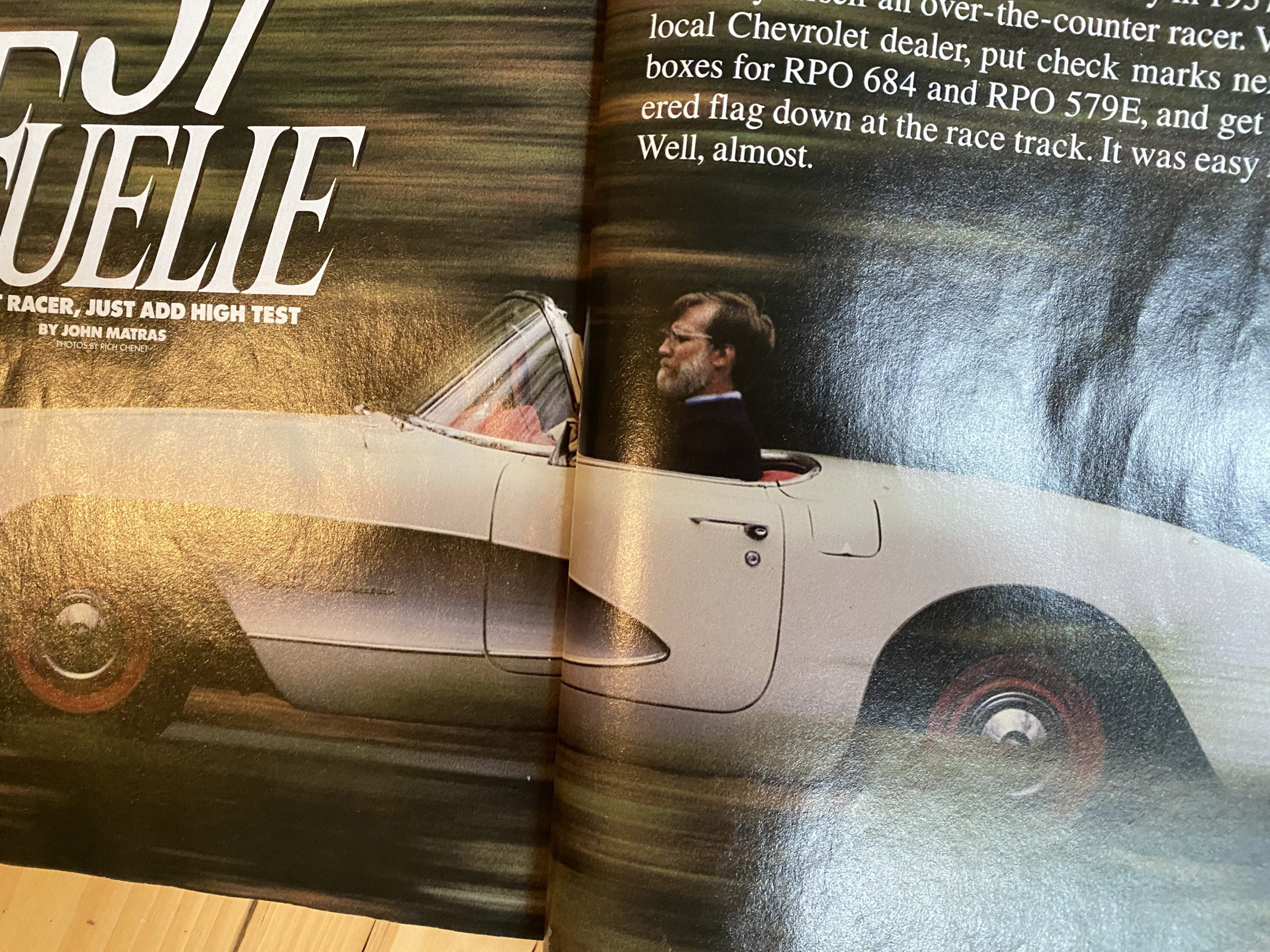
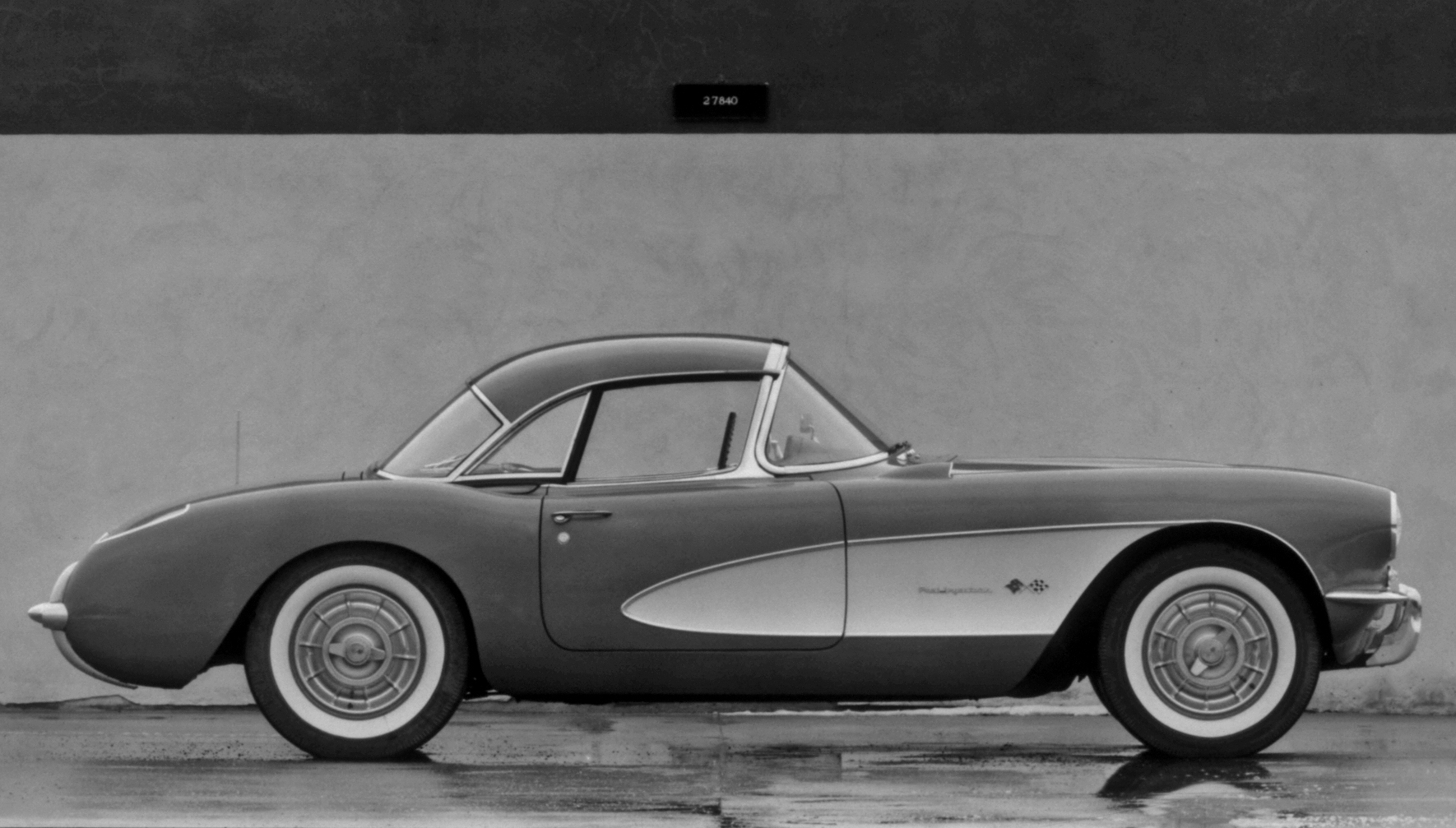
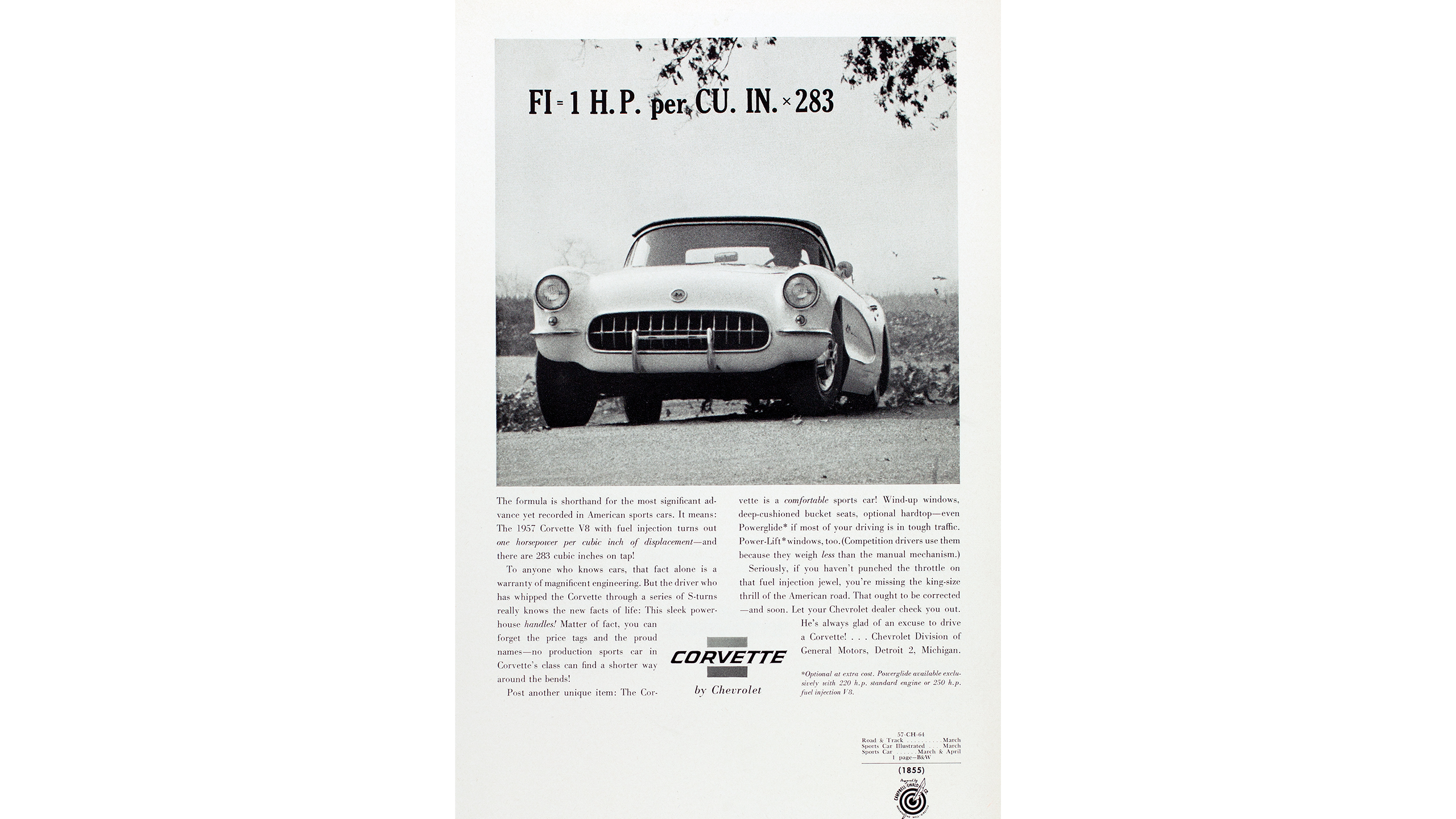
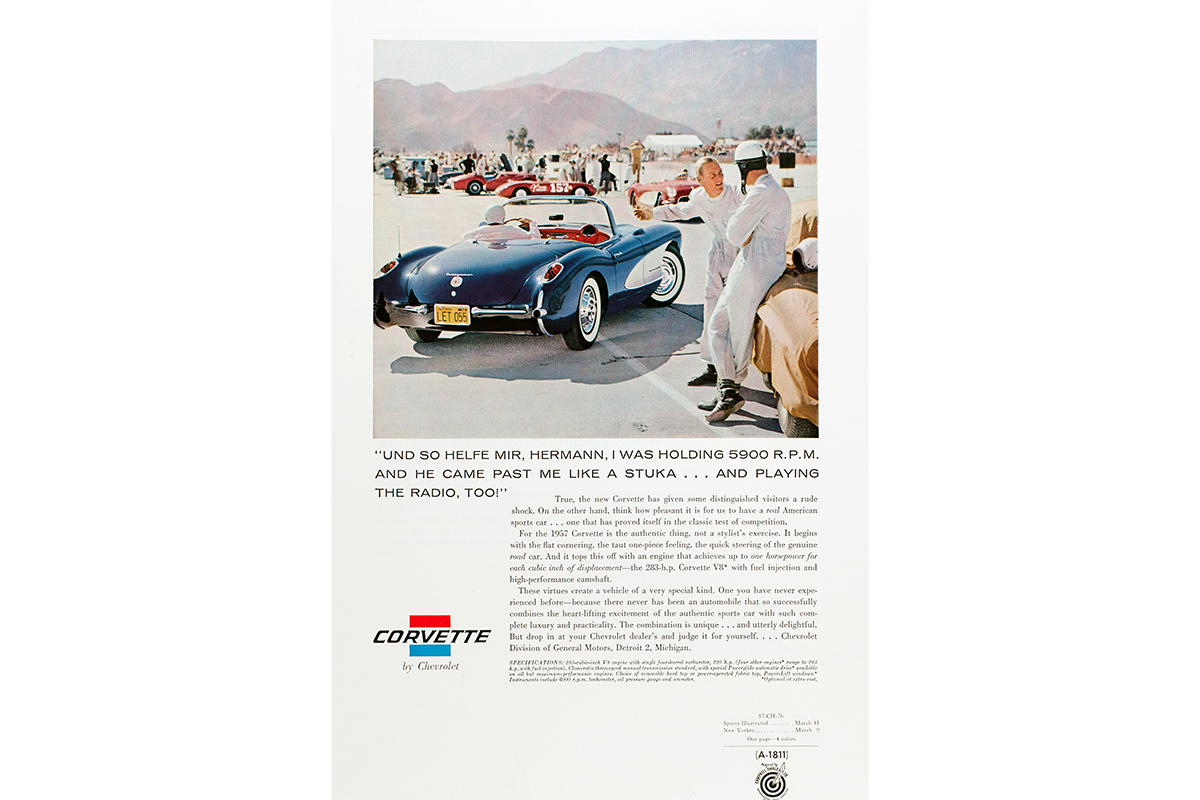


No ifs, ands or buts, it was easy in 1957 to build yourself an over-the-counter racer. Visit your local Chevrolet dealer, put checkmarks next to the boxes for RPO 684 and RPO 579E, and get a checkered flag down at the racetrack. It was easy in 1957. Well, almost.
That bundle of parts called RPO 684 came directly from the 1956 Sebring effort. Preparing cars for a production class meant that parts had to be available as a production option so, as John Fitch and crew made changes that would turn road cars into bona fide racers, the changes were recorded and for 1957 compiled into a Regular Production Option, or RPO. RPO 684 listed for a stiff $725 but made a Corvette race-ready, more rugged than its standard sibling and better handling, too.
See, racing really does improve the breed.
History/driving impressions of the 1957 Corvette RPO 684/RPO 579E originally published in Road & Track Corvette Special Edition 1991; republished by the author
RPO 684, also known as the “big brake option,” is that and more. The term “big brake” refers to the finned cast-iron brake drums with vented backing plates and air scoops, and Cera-metallix brake linings, which is a combination of ceramic and metallic materials. RPO 684 also included a limited-slip Positraction rear axle, with ratio choices of 3.70:1, 4.11:1 or a crank-spinning 4.56:1. The steering ratio was reduced from 21.0:1 to 16.3:1, by using a bolt-on fast-steering adapter plate that reduced lock-to-lock turns from 3.7 to 2.9 by lengthening the central idler arm.
Suspension changes were extensive, with a bigger anti-rollbar and shocks up front and stiffer springs all around. The live rear axle, normally on four-leaf springs, got an additional leaf on each side, raising the spring rate from 115 to 125 lb/in., the front coils for the double A-arm suspension boosted from 300 to 340 lb/in. The rear rate was increased relatively more than the front, decreasing understeer, though countered somewhat by a front anti-rollbar increased to 0.8125 in. from 0.6875 in.
Wider steel rims (5.5 in. vs 5.0 in.) were separately available for $14. These wheels differed from standard wheels in not having the three knobs needed to mount the full wheel covers (complete with Nader-nettling spinners), probably because the wheel covers would interfere with brake cooling. Small hubcaps were provided with the 5.5-in. rims but were, of course, removed for racing. Recommended for competition were 7.10/7.60 X 15 six-ply racing tires.
A four-speed transmission was available for the first time in 1957, along with the base three-speed manual or optional three-speed automatic. The four-speed was a Borg-Warner three-speed manual that was modified by Chevy engineers. The reverse gearset went into the otherwise empty tail shaft of the transmission, making room for four speeds inside the cast-iron box.
Surprisingly, the gear ratios were the same as on the three-speed gearbox except that a new ratio was sandwiched between 1st and 2nd. This made for a very short 2nd gear in acceleration runs – only about a 15-mph range, per an August 1957 Road & Track test – but the testers noted that the real advantage of the four-speed box was on a road course when the synchronized 1st year could be used for slow corners (41 to 56 mph) while the second was good for corners from 56 to 76. The testers also found the gearbox “virtually impossible to clash” and quieter than the three speed.
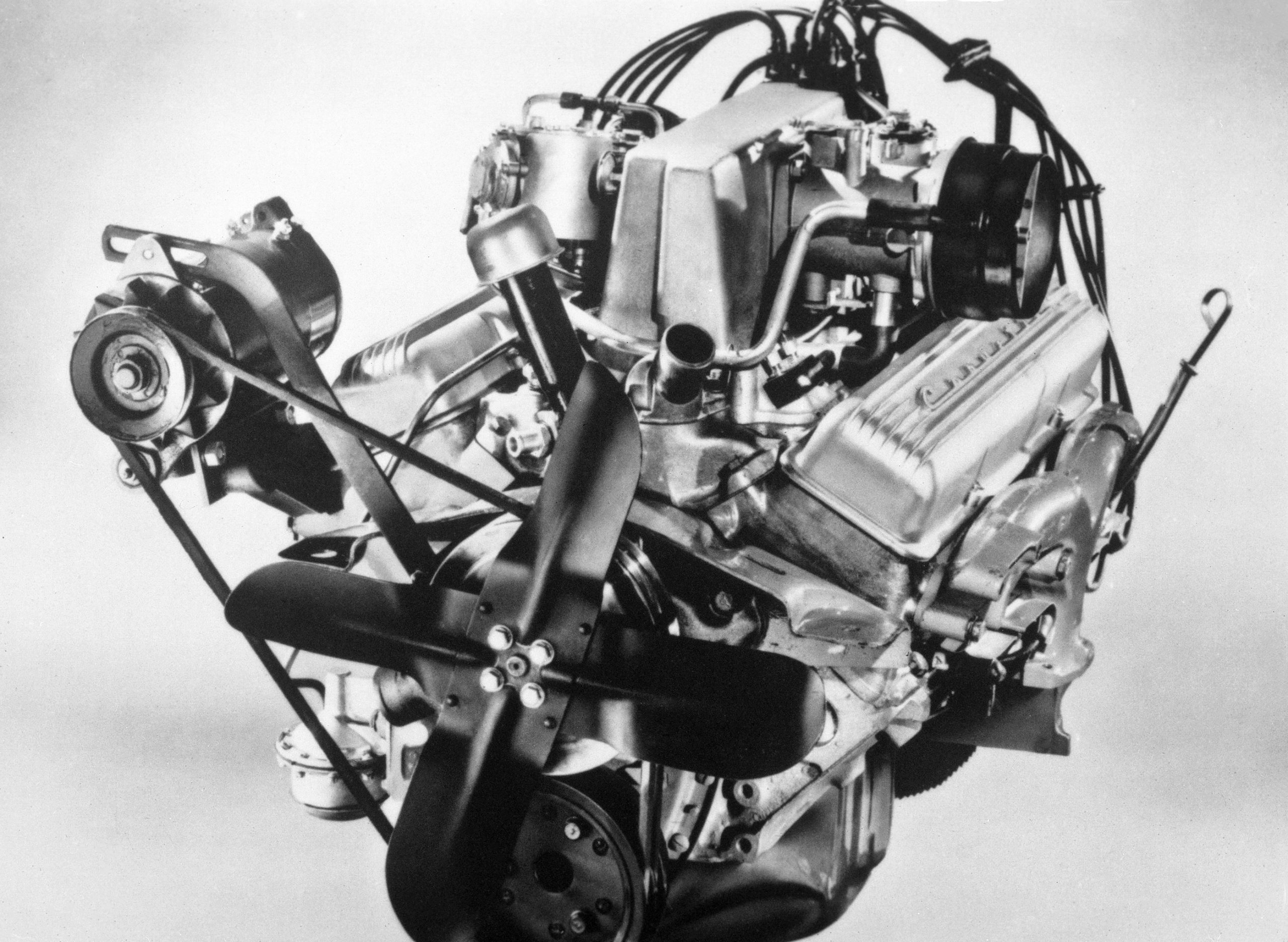
Also new for 1957 was fuel injection. As General Motors Engineering’s John Dolza explained in 1957, the potential of fuel injection was for improved fuel economy and “an exhaust free from hydrocarbons and a fuel system free from evaporation [which] would greatly help in an important phase of reducing air pollution.” Well, eventually, Mr Dolza, but in 1957 Road & Track said, “its best feature is in its instantaneous throttle response, completely free of any stutter or stumble under any situation.”
The fuel-injected car was quicker than a four-barrel V-8 tested in 1956, though the tested 1957 model had the four-speed and a 4.11:1 instead of 3.54:1 final-drive gear, as well as being bigger (it had 283 cu. in. versus 265 cu .in.) and equipped with the Duntov cam and other improvements. The fuel-injected car went from 0 to 60 mph in 5.7 seconds, compared to 7.3 seconds for the four-barrel, and did the quarter-mile in 14.3 seconds against 15.8.
You didn’t have to have RPO 684 to go racing, and some racers did well with a completely stock suspension. On the other hand, some racers found Chevy’s racing set up wanting. Dick Gulstrand made special springs for the Corvette. He told Michael Antonick that the “geometry was so bad that he had to make a co-kart out of it. We couldn’t let it move a lot because of the gyrations it would go through.”
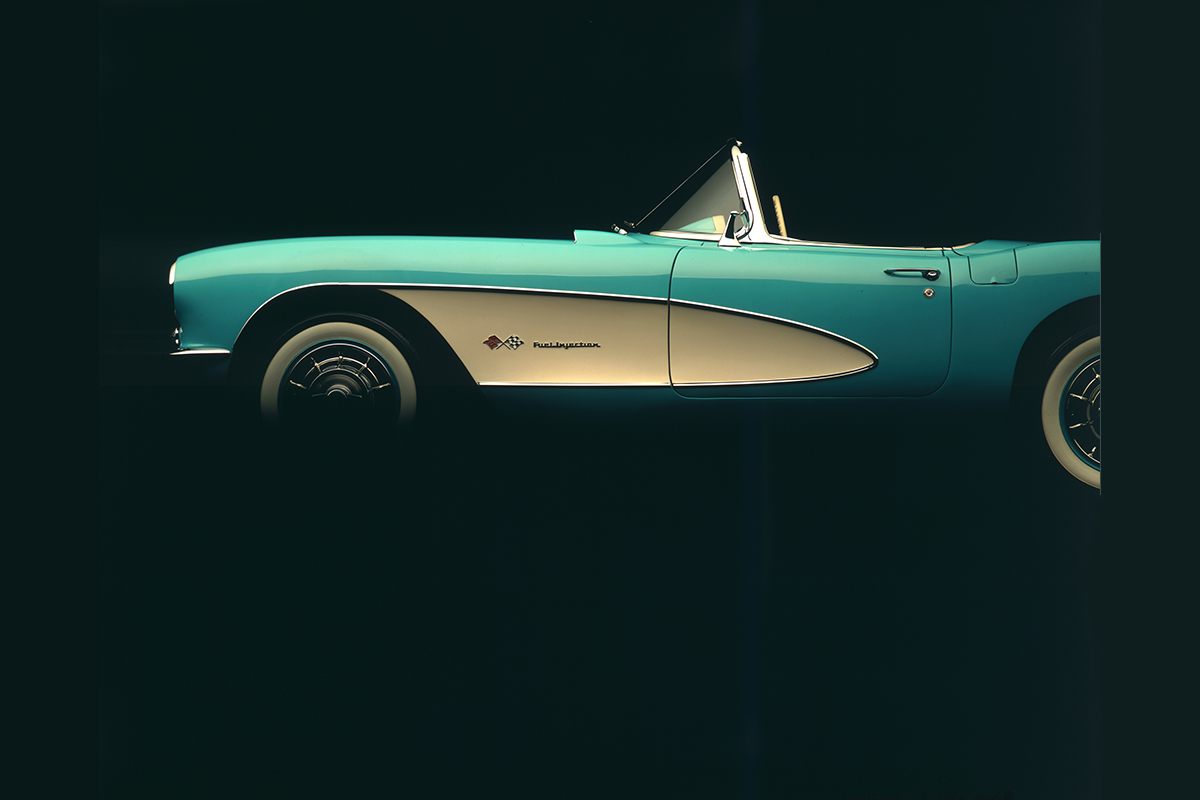
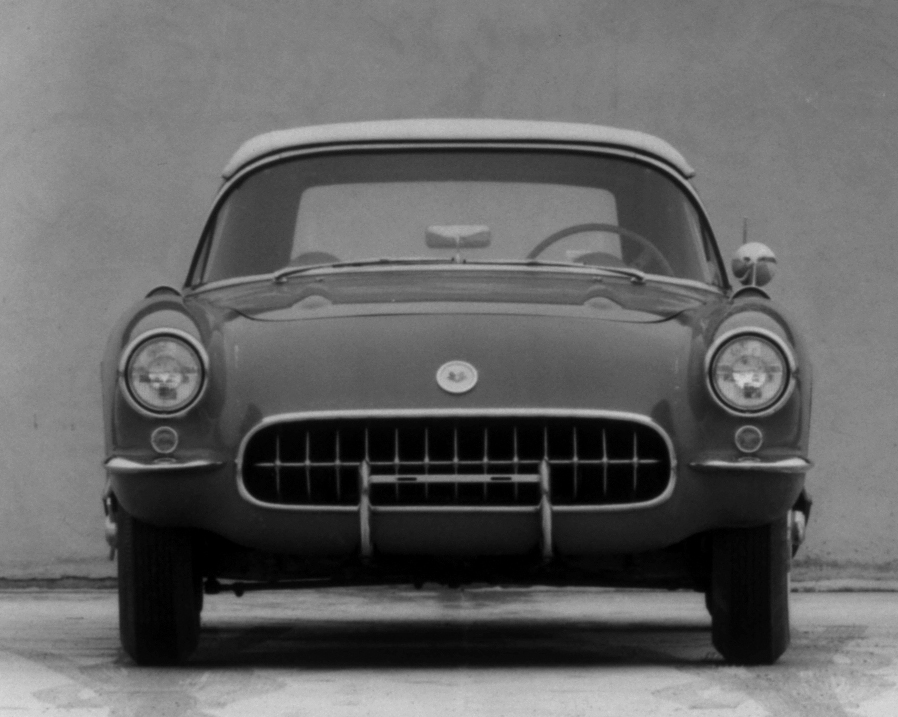
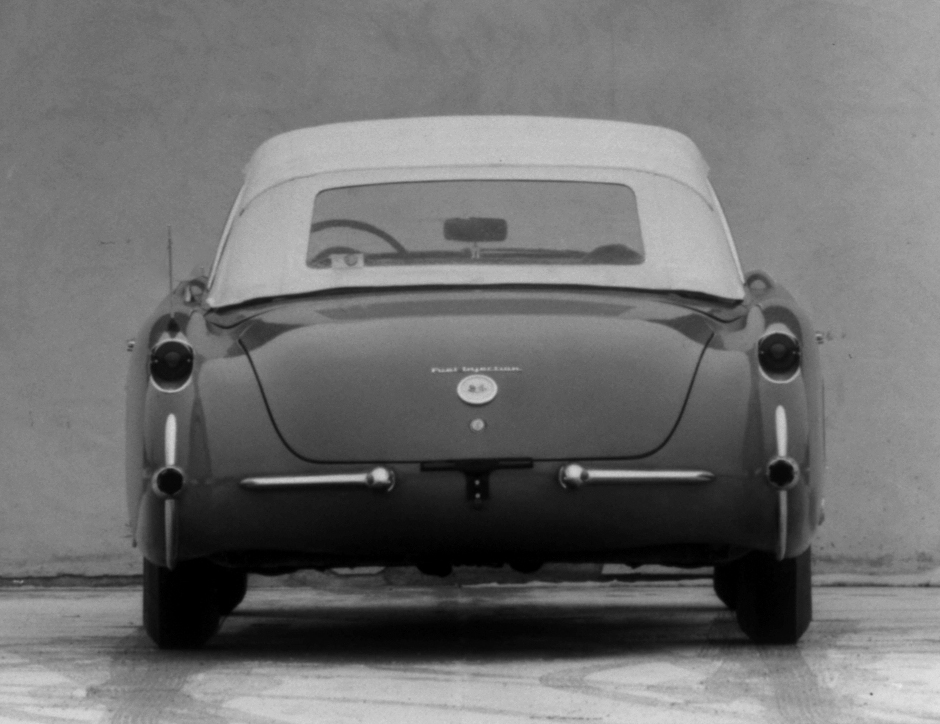
A rare Corvette RPO 684/RPO 579E car belongs to Frank Buck of Mountainhome, Pennsylvania. RPO 579E refers to a special fuel injection model that had a hand made fiberglass air box mounted on the driver’s side inner fender. This plenum supplied cool air to the fuel-injection units and via the rocker panels, to the left rear brake. The heater’s fresh air hose was routed to the right side rocker cooling the right rear brake, a heater therefore was not available. A radio was also verboten. Perhaps as a result of these exclusions, only 43 Corvette RPO 684/RPO 579E cars are believed to have been built in 1957.
Oddly, Buck’s car, #4394, was apparently not raced; there’s no sign of a rollbar and it still has the removable hardtop. Best leave that off, better to hear the burble of the pipes. The top is upholstered like the seats, in dark coral (officially, red) vinyl. It’s like driving a conch.
But no conch never moved so fast. The well-fed – and well-behaved –V-8 picks up its ‘glass and goes. The chassis is predictable on smooth pavement, but even Jean Dixon herself doesn’t know where rough pavement will bump steer it: Gulstrands gyrations. In 1957, RPO 684/579E was a ticket to a front row seat at the races. Add fuel injection and a four-speed and make that in the races.
Addendum: Original photos with the article by photographer Roy Query.
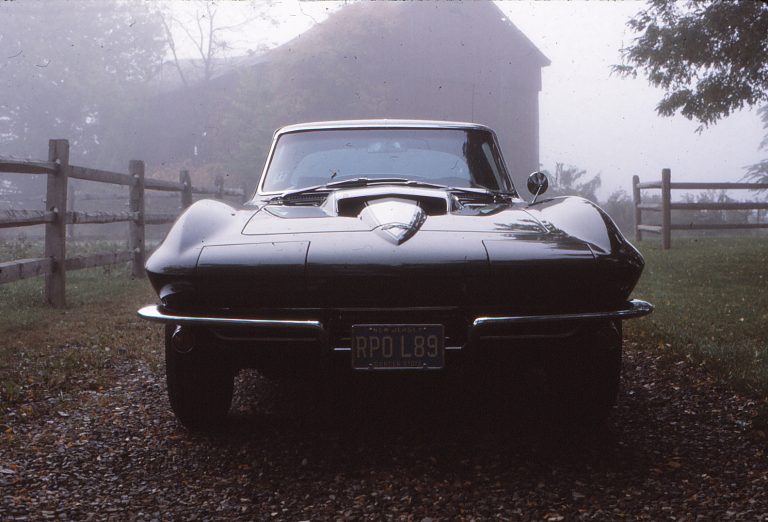
I’ve driven a number of Corvettes over the years. Particularly notable are the first Corvette, the inline-six-powered 1954 Chevrolet Corvette, and the awesome 1967 Chevrolet Corvette L89.
Frank Buck, who shared this car with me for the Road & Track Corvette Special passed away in 2023, including a 1941 Jeep (for a comparison review with a 1991 Jeep Wrangler), and World War II M4A3 Sherman Tank, one of the more usual off-road tests I’ve ever done.